

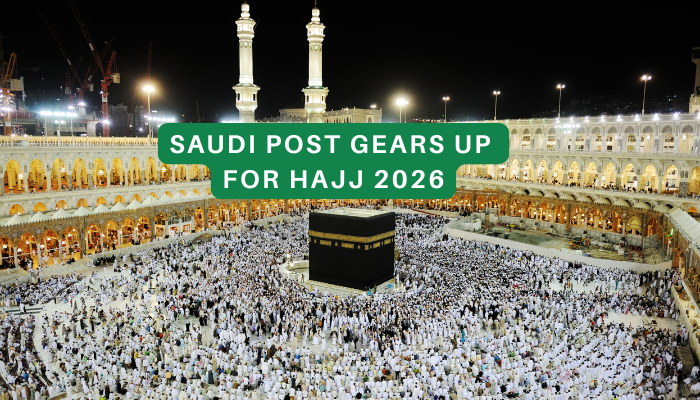
Every year, millions of Muslims from across the globe converge on the holy cities of Makkah and Madinah for Hajj, the largest annual human gathering on Earth. And every year, behind the prayers, the rituals, and the profound spiritual journeys, an enormous invisible machine keeps it all moving. In 2026, Saudi Post (SPL) is at the heart of that machine, and this year’s operation may be its most ambitious yet.
On May 4, 2026, the Saudi Press Agency (SPA) reported that SPL has announced its full operational readiness for the 1447 AH Hajj season, deploying an integrated logistics and postal ecosystem specifically engineered to serve pilgrims at every stage of their journey from the moment they leave home to the moment they arrive at their accommodations in Makkah and Madinah.
What Is Saudi Post’s Role in Hajj?
Most pilgrims arriving for Hajj associate the experience with prayer, sacrifice, and spiritual transformation. But the logistical reality of managing millions of simultaneous travelers demands operational precision that rivals that of the world’s busiest airports.
SPL serves as the primary logistics and geospatial enabler within the Makkah Route Initiative, one of the Ministry of Interior’s flagship programs under the broader Pilgrim Experience Program, itself a cornerstone of Saudi Vision 2030.
In practical terms, SPL handles the most burdensome part of any traveler’s journey: the luggage. Through a highly coordinated baggage coding and routing system, SPL teams in origin countries take custody of pilgrims’ bags before departure and ensure they are delivered directly to pilgrims’ rooms in Makkah and Madinah — without pilgrims ever needing to collect them at an airport carousel.
The Makkah Route Initiative: Year Eight, Bigger Than Ever
2026 marks the eighth consecutive year of the Makkah Route Initiative — and the initiative has expanded significantly. This season, SPL is operating across 17 international entry points in 10 countries:
- Morocco (Rabat-Salé International Airport and Casablanca)
- Indonesia
- Malaysia
- Pakistan
- Bangladesh
- Türkiye
- Côte d’Ivoire
- The Maldives
- Senegal (new in 2026)
- Brunei Darussalam (new in 2026)
The addition of Senegal and Brunei Darussalam this year reflects Saudi Arabia’s continuing commitment to broadening the initiative’s reach — bringing its seamless, technology-driven pre-clearance model to Muslim communities that previously navigated Hajj logistics entirely on their own.
How the Baggage System Works: Step by Step
For pilgrims enrolled in the Makkah Route Initiative, the travel experience begins well before boarding. Here is how SPL’s integrated baggage system operates:
1. Check in at the initiative lounge. At departure airports in participating countries, dedicated Makkah Route lounges serve as the starting point. Pilgrims hand over their luggage at the lounge, where a specialized SPL team takes over.
2. Electronic coding and sorting. Each bag is electronically coded with a unique identifier tied to the pilgrim’s accommodation details in Makkah or Madinah. The system matches baggage to transportation and housing plans simultaneously — no manual sorting, no confusion.
3. Pre-clearance of immigration and health procedures. While SPL handles the luggage, other teams within the initiative complete immigration checks, biometric data collection, visa issuance, and health verification — all at the origin airport. By the time pilgrims board their plane, their entry into Saudi Arabia is already administratively complete.
4. Direct delivery to accommodation. On the Saudi side, bags are transferred to dedicated buses and routed directly to pilgrims’ residences in Makkah and Madinah. The delivery is synchronized with pilgrims’ arrival times — so the bags are often there before the pilgrims themselves.
5. No airport collection required. This is the key benefit: pilgrims arriving in Saudi Arabia proceed directly from the plane to their accommodation, free of baggage queues, conveyor-belt waits, or customs complications. The spiritual journey begins immediately upon landing.
What Pilgrims Are Saying
The feedback from pilgrims who have used the initiative in previous years has been consistently positive. As reported by SPA this season, pilgrims processing through the Makkah Route lounges in Türkiye and Bangladesh expressed strong satisfaction with the baggage handling service, noting that it “significantly reduced time and effort” and allowed them to “proceed directly to their accommodations” without the logistical stress that often accompanies long-haul travel to high-congestion entry points.
For many first-time Hajj pilgrims — particularly elderly travelers and those from countries with less familiarity with international travel- this level of support represents a genuine transformation in how the pilgrimage is experienced.
Tawakkalna Integration: Digital Permits Before Departure
Saudi Arabia’s national app Tawakkalna — now used by over 35 million registered users and offering more than 1,300 government services — has been extended specifically for Makkah Route pilgrims in 2026.
Pilgrims can now access and present their Hajj permits digitally through the app before they even leave their home countries, as part of an integrated digital framework developed by the Saudi Data and Artificial Intelligence Authority (SDAIA). This means paperwork that once required physical documents and multiple manual checks is now handled through a verified digital identity layer — faster, more accurate, and far less prone to human error.
Saudi Arabia’s Minister of Transport, Saleh Al-Jasser, was personally present to greet the first arriving initiative flights this season — a signal of how seriously the Kingdom regards this program at the highest levels of government.
On-the-Ground Readiness: Mina, Jamarat, and the Holy Sites
Beyond the airports and baggage halls, the broader Hajj infrastructure is also fully ready for 1447 AH. The Ministry of Hajj and Umrah has announced the completion of its administrative and field preparations to manage pilgrims’ movement to the Jamarat site for the stoning ritual, facilitate access to the Haramain High Speed Railway (Al Mashaaer Al Mugaddassah Metro), and coordinate transport between the holy sites.
At Mina, the Kidana Development Company — the executive arm of the Royal Commission for Makkah City and Holy Sites — has completed a full replacement and upgrade of fire suppression and cooling systems across the tent city. The project covered 188 residential zones comprising 565 tents with a total network length of 339,000 linear meters, replacing aging infrastructure with modern systems built to international technical standards. The upgrade improves fire safety, reduces maintenance failures, and ensures reliable cooling throughout the peak heat of the Hajj days.
The Saudi Food and Drug Authority (SFDA) has also intensified its oversight operations, inspecting 27 shipments from 20 countries and clearing more than 187 tonnes of medical supplies — while preventing approximately one tonne of non-compliant food and pharmaceutical products from entering the holy sites.
A Vision 2030 Story in Action
It would be easy to view these logistical improvements purely as operational upgrades. But the scale and ambition of what Saudi Arabia is building around Hajj, digital pre-clearance in 10 countries, AI-powered identity verification, smart baggage routing, and real-time coordination between dozens of government entities, represents something larger.
This is Saudi Vision 2030’s Pilgrim Experience Program in tangible action. The program’s stated goal is to elevate the quality of the pilgrimage from a logistically challenging undertaking into a spiritually focused journey — one where pilgrims arrive in Makkah rested, processed, and free to concentrate entirely on worship.
Saudi Arabia currently receives approximately 1.8 million international pilgrims annually for Hajj, with domestic pilgrims adding hundreds of thousands more. The Kingdom has publicly stated its ambition to expand Hajj capacity significantly in the coming years as infrastructure investments in Makkah and Madinah continue.
With initiatives like the Makkah Route expanding to new countries each year, digital integration deepening through platforms like Tawakkalna and Nusuk, and SPL’s logistics network becoming more sophisticated with every season, Saudi Arabia is building the infrastructure for that future — one Hajj season at a time.
Key Facts: Hajj 1447 AH / 2026
| Detail | Information |
|---|---|
| Hajj Season | 1447 AH (2026) |
| Expected Dates | Around June 4–9, 2026 (subject to moon sighting) |
| Makkah Route Initiative Year | 8th year of operation |
| Countries in Initiative | 10 (new: Senegal, Brunei Darussalam) |
| International Entry Points | 17 airports |
| SPL Role | Baggage coding, routing & delivery |
| Key Digital Platforms | Nusuk Hajj, Tawakkalna, Absher |
| Mina Upgrade | 188 zones, 565 tents, 339,000 linear meters of new fire/cooling network |
| Medical Supply Checks | 187+ tonnes cleared; ~1 tonne non-compliant goods blocked |
| Tawakkalna Users | 35+ million registered; 1,000+ daily active services |
What This Means for Pilgrims from Pakistan, Bangladesh & South Asia
The Makkah Route Initiative has particular significance for South Asian pilgrims, who collectively represent one of the largest national groupings performing Hajj each year. Pakistan and Bangladesh are both among the 10 countries in the 2026 initiative, meaning pilgrims from these countries benefit fully from:
- Pre-departure passport and visa clearance at their home airports
- SPL’s baggage coding and direct-delivery system
- Tawakkalna digital permit access before boarding
- Dedicated bus transport from the Saudi entry point directly to accommodation
- No immigration queues upon arrival in Saudi Arabia
For the millions of Pakistani and Bangladeshi families sending a loved one for Hajj — often a once-in-a-lifetime journey — this level of logistical support represents genuine peace of mind.
Frequently Asked Questions: Makkah Route Initiative 2026
Q: What is the Makkah Route Initiative? The Makkah Route Initiative is a program led by Saudi Arabia’s Ministry of Interior, part of the Pilgrim Experience Program. It allows pilgrims from participating countries to complete immigration, customs, health, and baggage procedures at their departure airports before traveling to Saudi Arabia — eliminating queues and delays on arrival.
Q: Which countries are in the Makkah Route Initiative for Hajj 2026? Ten countries: Morocco, Indonesia, Malaysia, Pakistan, Bangladesh, Türkiye, Côte d’Ivoire, the Maldives, Senegal, and Brunei Darussalam. Senegal and Brunei are new additions in 2026.
Q: What does Saudi Post (SPL) do during Hajj? SPL provides the baggage coding and delivery service within the initiative. Pilgrims hand over bags at the departure lounge; SPL electronically codes them and coordinates their delivery directly to pilgrims’ accommodations in Makkah or Madinah — before the pilgrim arrives.
Q: How do I register for Hajj 2026? Registration is handled via the Nusuk platform (hajj.nusuk.sa) or the Nusuk app. Saudi citizens and residents can also register through the Absher platform. Makkah Route enrollment is managed through the national Hajj mission of your country.
Q: What is Tawakkalna’s role in Hajj 2026? Tawakkalna has been extended to allow Makkah Route pilgrims to access and present Hajj permits digitally before departure, as part of a connected digital system developed by SDAIA. It allows faster processing and reduces reliance on physical documents.
Q: When is Hajj 2026? Hajj 1447 AH falls approximately around June 4–9, 2026, subject to the official moon sighting declaration by Saudi Arabia’s Supreme Court.
Final Thoughts
Saudi Post’s announcement of operational readiness for Hajj 1447 AH is more than a press release. It is a snapshot of how Saudi Arabia is redefining what it means to be a host to the world’s 1.8 billion Muslims — treating the logistical aspects of pilgrimage as a public service obligation, not an afterthought.
For pilgrims, the improvements are tangible: less time in queues, no baggage anxiety, a direct path from their home city to the steps of Al-Masjid Al-Haram. For Saudi Arabia, the program is a powerful demonstration of Vision 2030’s promise — that the Kingdom can leverage technology, national institutions, and international partnerships to improve people’s lives, one sacred journey at a time.
Source: Saudi Press Agency (SPA), May 4, 2026. Additional reporting from SPA, Arab News, SDAIA, Ministry of Hajj and Umrah, and Nusuk official platforms. All images are for illustrative purposes. This article was produced by Saudi Scoop for informational purposes.

I’m Soha Owais, a law graduate with an LLB (Hons), blending my legal background with a passion for storytelling. As an author and writer at Saudiscoop.com, I craft engaging narratives that connect with both local and international audiences, bringing a fresh and informed perspective to the stories that matter.

 announces full Hajj 2026 readiness with baggage delivery, pre-clearance in 10 countries, and tech upgrades for pilgrims.)