
Quick Facts
- Iqama issuance/renewal fee: SAR 650 per year for company and institution employees
- Domestic worker Iqama fee: SAR 600 per year
- Work permit levy (expat levy): SAR 800/month per expat worker where expats exceed Saudi employees
- Work permit levy (balanced workforce): SAR 700/month per expat worker
- Industrial-sector levy treatment: verify the establishment’s current status in Qiwa before calculating
- Dependent levy: verify the amount due in the official payment channel before paying
- No general 90-day dependent-levy exemption was confirmed in the official sources checked
- Platform and delivery charges: confirm on the final Absher payment screen
- Late penalties: confirm the amount shown by Absher before payment
- Renewal periods: since July 19, 2026, domestic-worker permits can be issued or renewed for three months or multiples of three months
- Health insurance: Mandatory and verified automatically through the CCHI platform
- Pays Iqama fee: Employer by law; deductions from salary are not allowed
- Pays dependent fee: Employee unless stated otherwise in the employment contract
- Jawazat helpline: 920001212
What Is an Iqama?
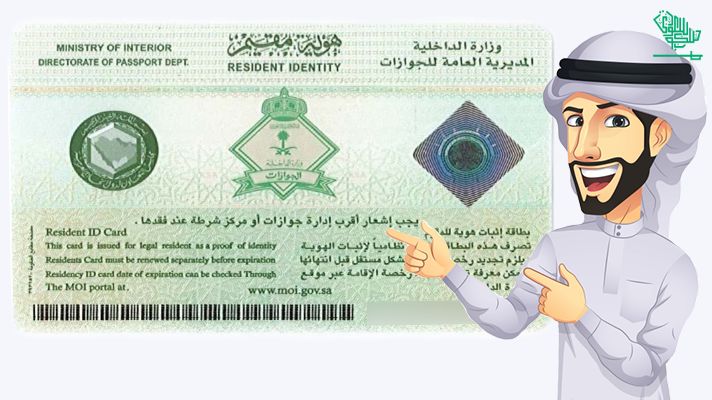
The Iqama (also written as Iqama or Iqama) is the official residence permit issued by Saudi Arabia’s Ministry of Interior through the General Directorate of Passports (Jawazat). It is the primary identity document for all foreign nationals living and working in the Kingdom.
Without a valid Iqama, an expatriate cannot legally reside or work in Saudi Arabia. The document is required for virtually every aspect of daily life:
- Opening a bank account
- Renting a home (Ejar contract)
- Accessing government services and Absher
- Enrolling children in schools
- Purchasing a local SIM card
- Registering a vehicle
- Accessing healthcare under CCHI-regulated insurance
- Exiting and re-entering the Kingdom (exit/re-entry visa)
- Obtaining a driving license
- Filing any government application
Saudi Arabia’s mid-2024 population stood at 35.3 million, including approximately 15.7 million non-Saudis. This means Iqama fees and renewal processes directly affect nearly half the country’s total residents.
Complete Iqama Fee Structure 2026
Iqama costs in Saudi Arabia are not a single fee. In 2026, the total cost is built from four components, each with different payers and schedules.
Component 1: Iqama Issuance and Renewal Fee
| Category | Annual Fee (SAR) | Who Pays |
|---|---|---|
| Company and institution employees | 650 | Employer |
| Domestic workers | 600 | Employer |
The SAR 650 annual fee covers the official residence permit document itself. It is paid by the sponsoring employer and cannot legally be deducted from the employee’s salary.
Quarterly renewal amounts (when paying in installments rather than annually):
- 3 months: approximately SAR 163
- 6 months: approximately SAR 325
- 9 months: approximately SAR 488
- 12 months: SAR 650
Quarterly renewal was introduced to give employers more flexibility. Since July 19, 2026, domestic-worker permits can also be issued or renewed for a minimum of three months and multiples of three months.
Component 2: Absher Processing Fee (from January 2025)
| Service | Fee (SAR, incl. VAT) |
|---|---|
| Iqama issuance or renewal (per transaction) | 51.75 |
| Exit and re-entry visa extension | 103.50 |
| Final exit visa | 70.00 |
| Passport information update | 69.00 |
The Ministry of Interior introduced a processing fee of SAR 51.75 per Iqama issuance and renewal through the Absher Business platform, effective January 2025. This is a service fee on top of the base SAR 650 annual fee and applies to every renewal transaction regardless of duration.
Component 3: Work Permit Levy (Maktab Amal / Expat Levy)
This is the highest recurring cost in the Iqama ecosystem and is paid entirely by the employer.
| Company Workforce Composition | Monthly Levy per Expat Worker (SAR) |
|---|---|
| Expats do not exceed Saudi employees | 700 |
| Expats exceed Saudi employees | 800 |
| Work permit license fee (annual) | 100 |
Payment schedule options:
- 3 months: SAR 2,400 (at SAR 800/month rate)
- 6 months: SAR 4,800
- 9 months: SAR 7,200
- 12 months: SAR 9,600
July 19, 2026 update: The Ministry of Interior and HRSD began allowing domestic-worker residence permits to be issued or renewed for a minimum of three months and multiples of three months, with fees paid for the selected period. See the official Saudi Press Agency announcement. For other employees, use Qiwa and Absher to see the periods available to the employer.
Critical legal point: Saudi Labor Law Article 40 assigns specified recruitment, residence, and work-permit costs to the employer. Use official HRSD or Qiwa complaint channels if these costs are deducted from salary.
Industrial-Sector Levy: Verify the Establishment’s Current Qiwa Status
Levy treatment can depend on the establishment’s activity, license, workforce composition, and current government decisions. The official sources checked did not support presenting a blanket permanent exemption for every industrial company. Employers should use the amount generated in Qiwa as the current payable figure.
Industrial-sector verification checklist:
- Industrial establishments: verify any exemption or reduction in Qiwa for the specific establishment
- Domestic workers: also exempt from the work permit levy
- All other private sector employers: levy applies as above
If you work in manufacturing or a licensed industrial facility, ask the employer to confirm the current levy generated in Qiwa. Do not assume a zero levy from the sector name alone.
Small business considerations:
- Businesses registered with GOSI can be exempted from the levy for up to 2 foreign employees
- If the business employs at least one Saudi citizen registered with GOSI, it can exempt up to 4 expatriate employees
- Reduced levies may also apply under Nitaqat (Saudization) compliance programs
Component 4: Dependent Levy
| Category | Monthly Fee (SAR) | Annual Fee (SAR) | Who Pays |
|---|---|---|---|
| Each dependent (spouse, children, others) | 400 | 4,800 | Employee (sponsor) |
The dependent levy is paid by the expatriate employee personally, not by the employer, unless the employment contract specifically states otherwise. This is a critical distinction, especially for employees with large families.
Quarterly dependent fee payments:
- 3 months: SAR 1,200 per dependent
- 6 months: SAR 2,400 per dependent
- 9 months: SAR 3,600 per dependent
- 12 months: SAR 4,800 per dependent
New-arrival warning: An official source was not found for a blanket 90-day exemption from dependent levies. Do not assume the first 90 days are free; use the amount generated by the official payment channel.
Domestic worker dependent rules:
- Saudi citizens: the dependent levy applies starting with the fifth domestic worker
- Foreign employers: the levy applies starting with the third domestic worker
- Premium Residency holders: the levy applies starting with the fifth domestic worker
Total Annual Iqama Cost: Real-World Examples
Example 1: Single expat employee, no dependents (balanced workforce)
- Iqama fee: SAR 650
- Absher processing: SAR 51.75
- Work permit levy (SAR 700 x 12): SAR 8,400
- Work permit license: SAR 100
- Dependent levy: SAR 0
- Estimated total annual cost: SAR 9,201.75
Example 2: Expat employee with spouse and two children (workforce with more expats than Saudis)
- Iqama fee: SAR 650
- Absher processing: SAR 51.75
- Work permit levy (SAR 800 x 12): SAR 9,600
- Work permit license: SAR 100
- Dependent levy (SAR 400 x 12 x 3 dependents): SAR 14,400
- Health insurance (approximate): SAR 3,000 to 6,000
- Estimated total annual cost: SAR 27,800 to 30,800
Example 3: Domestic worker (Iqama only, no levy)
- Iqama fee: SAR 600
- Absher processing: SAR 51.75
- Work permit levy: SAR 0 (domestic workers exempt)
- Estimated total: SAR 651.75 per year
Example 4: Industrial-sector worker (verify current Qiwa levy)
- Iqama fee: SAR 650
- Absher processing: SAR 51.75
- Work permit levy: use the amount generated in Qiwa for the establishment
- Estimated total: cannot be confirmed until Qiwa generates the applicable levy
These are estimates. Actual totals depend on the workforce Saudization level, the health insurance provider, the specific Nitaqat compliance status, and the number and type of dependents. Always confirm the applicable rate with your HR department or directly through Absher/Muqeem.
How to Renew Iqama in 2026: Step by Step
Iqama renewal is the employer’s responsibility for the base fee and levy. The process is now largely digital through Absher Business or the Muqeem platform.
Prerequisites Before Renewal
All of the following must be in order before the renewal can proceed:
- Valid passport with at least 3 months remaining validity (6 months recommended)
- Active health insurance verified on the CCHI (Council of Cooperative Health Insurance) platform. As of 2025, the system performs automatic digital verification, eliminating the need to submit paper insurance documents.
- Biometric data up to date: fingerprints and facial scan at a Jawazat center, required for Iqama holders and dependents over 15 years old
- Traffic fines cleared: Unpaid traffic violations block Iqama renewal completely. Check and pay fines via Absher or Najm before attempting renewal.
- Work permit levy paid: all outstanding levy dues must be settled
- Dependent fees paid: if applicable, all dependent levy outstanding balances must be cleared
- No other outstanding government dues: check via Absher under “My Services.”
Renewal Methods
Method 1: Via Absher Business (Employer)
- Log in to Absher Business at absher.sa
- Select “Iqama Renewal” from the services menu
- Enter the Iqama number of the employee being renewed
- Select the renewal duration (3, 6, 9, or 12 months)
- Verify all prerequisites are met (system checks automatically)
- Pay the Iqama fee (SAR 650 or pro-rated amount) plus SAR 51.75 processing fee
- Confirm the transaction
- The Iqama is renewed digitally, and the new expiry date is updated in the system immediately
Method 2: Via Muqeem Platform
- Go to muqeem.sa and log in with employer credentials
- Navigate to Iqama Renewal under Workforce Management
- Follow the same steps as above
- Muqeem is the preferred platform for employers managing multiple Iqamas simultaneously
Method 3: Via Online Banking (SADAD)
- Log in to your bank’s app or online banking portal
- Navigate to Government Payments or SADAD
- Select Ministry of Interior
- Choose “Alien Control” then “Renew Iqama.”
- Enter the Iqama ID number and select the renewal duration
- Confirm and pay. Renewal is processed instantly.
Method 4: Via ATM
- Insert your bank card at any Saudi bank ATM
- Navigate to SADAD or Bill Payment
- Select Ministry of Interior, then Iqama Renewal
- Enter the Iqama ID and duration
- Confirm the payment
Method 5: At a Jawazat Branch. For complex cases or when digital methods are not resolving correctly, visit your nearest Jawazat (Passport) office with the employee’s passport and Iqama. Staff can process the renewal manually and resolve system discrepancies on the spot.
After Renewal
Once renewed, the new expiry date is reflected in Absher, Muqeem, and the Jawazat system within minutes. The physical Iqama card does not need to be reprinted for most renewals, as the digital record is the legally binding one. If a physical card replacement is needed (damaged, lost, or significant information change), visit a Jawazat office.
Online Renewal for Dependents Outside Saudi Arabia (2026 Update)
As of recent Absher and Muqeem updates, dependents and domestic workers can now renew their Iqama online even if they are currently outside Saudi Arabia, provided that:
- The head of household (sponsor) is physically present in the Kingdom
- The sponsor initiates and completes the renewal process through Absher or Muqeem
- All fees and prerequisites are met by the sponsor
This is a significant practical improvement for expat families where dependents may be abroad for extended periods.
Late Renewal Penalties and Consequences
The Saudi government has progressively made late Iqama renewal penalties stricter. Understanding them is essential for every expat and employer.
Fines for Late Renewal
| Offence | Fine (SAR) |
|---|---|
| First late renewal | 500 |
| Repeated delays | 1,000 |
| Double fees for the employer | Up to 100,000 |
| Applicable per the MOI penalty schedule for delayed reporting | Applicable per MOI penalty schedule for delayed reporting |
Important: Fines are not waived for ignorance of the expiry date. It is the employer’s responsibility to track all employee Iqama expiry dates and begin the renewal process at least 3 working days before expiry.
Consequences of an Expired Iqama
An expired Iqama causes cascading effects beyond just the fine:
- Bank accounts may be frozen or restricted
- Absher access suspended, blocking all government digital services
- Inability to pay utilities, renew Istimara (vehicle registration), or access healthcare
- An employment contract may be flagged by Qiwa
- Travel bans in more serious overstay situations
- Inability to open new accounts or sign official contracts
An expired Iqama is not simply an administrative inconvenience. It affects nearly every aspect of life in Saudi Arabia and should be treated with the same urgency as a passport expiry.
Iqama Issuance: How to Get an Iqama for the First Time
Iqama issuance is initiated by the sponsoring employer after the expatriate employee enters Saudi Arabia on a work visa. Here is the general sequence:
Step 1: Employer registration. The employer must be registered with the Ministry of Human Resources and Social Development (MHRSD) and have a valid Nitaqat status on the Qiwa platform.
Step 2: Work visa issuance. The employer applies for the work visa through the Muqeem employer portal. The visa is issued and the employee enters Saudi Arabia.
Step 3: Medical examination. The employee undergoes a medical examination at an approved medical center within Saudi Arabia within the first weeks of arrival. Results are uploaded to the system.
Step 4: Biometric registration. The employee visits a Jawazat center or authorized biometric collection center to have fingerprints and a facial scan taken.
Step 5: Health insurance activation. The employer activates a CCHI-compliant health insurance policy for the employee. This is verified digitally.
Step 6: Iqama issuance via Absher Business or Muqeem. The employer submits the Iqama issuance request digitally, paying the SAR 650 fee plus the SAR 51.75 processing fee.
Step 7: Iqama card delivered or collected. The Iqama card is typically delivered to the employer or collected from the Jawazat office. Processing takes 5 to 10 working days in most cases.
Timeline: The Iqama must be issued within 90 days of entry on the work visa. Staying beyond 90 days without an Iqama is illegal and subject to fines.
Sponsorship Transfer: Moving Between Employers
Under Saudi Arabia’s ongoing labor reforms, expatriates now have more rights to change employers without the original employer’s consent in specific circumstances:
- After the employment contract expires
- If the employer has not paid wages for 3 or more months
- If the employer has not provided the contracted work scope
- If there is documented workplace abuse
Qiwa platform: All sponsorship transfers are now processed through the Qiwa platform (qiwa.com.sa). The new employer is responsible for paying the sponsorship transfer fee.
Fee: Sponsorship transfer fees vary; confirm the current amount on Qiwa at the time of transfer, as these are updated periodically.
Premium Residency: The Kafeel-Free Alternative
For expats planning long-term stays and wanting independence from employer sponsorship, Saudi Arabia offers the Premium Residency (Iqama Mumayyaza) program:
| Option | Cost (SAR) |
|---|---|
| Permanent Premium Residency | 800,000 (one-time) |
| Renewable Premium Residency | 100,000/year |
Premium Residency holders can live and work in Saudi Arabia without a sponsor (kafeel-free). They can switch jobs freely, start businesses, and sponsor their own family members. The dependent levy of SAR 400/month applies starting from the fifth domestic worker, not from the first.
Eligibility: Applicants must be aged 21 or older, medically fit, financially capable, with no criminal record, and must meet category-specific criteria (investor, specialized talent, entrepreneur, or others).
Who Pays What: Employer vs Employee
This is the most commonly confused aspect of Iqama fees. Saudi Labor Law is clear:
| Fee | Payer | Legal Basis |
|---|---|---|
| Iqama issuance and renewal (SAR 650) | Employer | Labor Law Article 40 |
| Work permit levy (SAR 700 to 800/month) | Employer | Labor Law Article 40 |
| Work permit license fee (SAR 100/year) | Employer | Labor Law Article 40 |
| Absher processing fee (SAR 51.75) | Employer | MOI service fee |
| Medical examination | Employer | Standard practice |
| Health insurance | Employer | CCHI regulations |
| Dependent levy (SAR 400/month per dependent) | Employee | Unless contract states otherwise |
| Sponsorship transfer fee | New employer | Labor reform guidelines |
If an employer deducts Iqama or work-permit costs from salary: Article 40 assigns specified recruitment, residence, and work-permit costs to the employer. Use the official HRSD services and complaint channels or the relevant Qiwa service; do not send personal or payment information to an unofficial complaint website.
Payment Methods for Iqama Fees
| Method | Platform |
|---|---|
| Absher Business | absher.sa (employer account) |
| Muqeem | muqeem.sa (employer account) |
| Online banking | Al Rajhi, SNB, Riyad Bank, Alinma Bank, and all major banks |
| Bank ATM | SADAD section, Ministry of Interior, Iqama Renewal |
| STC Pay / Apple Pay | Via Absher app |
| Jawazat branch | In person with employer representative |
Frequently Asked Questions
The base Iqama renewal fee is SAR 650 per year for company and institution employees, or SAR 600 for domestic workers, paid by the employer. An additional Absher processing fee of SAR 51.75 applies per renewal transaction (effective January 2025). The employer also pays the monthly work permit levy of SAR 700 to SAR 800 per employee separately.
The employer is legally required to pay for the Iqama issuance and renewal fee (SAR 650), the Absher processing fee (SAR 51.75), the work permit levy (SAR 700 to 800/month), and health insurance. The employee personally pays the dependent levy of SAR 400/month per dependent, unless the employment contract specifies otherwise. Deducting any of the employer-responsibility fees from an employee’s salary is illegal under Labor Law Article 40.
The expat levy, officially called the work permit fee or Maktab Amal fee, is a monthly fee paid by the employer for each foreign worker. The rate is SAR 700/month if expats do not exceed Saudi employees, or SAR 800/month if they do. It is paid for a minimum of 3 consecutive months at a time and cannot be deducted from employee salaries.
The official sources checked did not confirm a blanket permanent cancellation for every industrial company. The employer should verify the current levy generated for its establishment in Qiwa.
The amount due should be confirmed through the official payment channel. The official sources checked did not confirm a blanket 90-day exemption for newly arrived dependents.
SAR 500 for a first offense and SAR 1,000 for repeated delays. Employers failing to report undocumented workers can be fined up to SAR 100,000. An expired Iqama can also result in frozen bank accounts, loss of Absher access, employment restrictions, and travel bans.
Yes. Since July 19, 2026, domestic-worker residence permits can also be issued or renewed for a minimum of three months and multiples of three months. Confirm the available period and final fee in Absher before payment.
Yes. As of 2026, sponsors can renew the Iqama of dependents who are currently outside Saudi Arabia through Absher or Muqeem, provided the sponsor is physically present in the Kingdom, and all fees and prerequisites are met.
No. As of 2025, the CCHI (Council of Cooperative Health Insurance) platform performs automatic digital verification of health insurance validity. Manual document submission is no longer required. Employers and employees can verify insurance status in real time by entering the Iqama number on the CCHI website.
Your bank accounts may be restricted, Absher access suspended, and you may face fines of SAR 500 or more. In serious cases, travel bans apply. Notify your employer immediately and initiate the renewal process as soon as possible. If you are outside Saudi Arabia with an expired Iqama, your employer must issue a new exit/re-entry visa after renewal before you can re-enter. Call the Jawazat helpline at 920001212 for guidance on your specific situation.
Premium Residency is a kafeel-free residency program allowing expats to live and work in Saudi Arabia without a sponsor. It costs SAR 800,000 as a one-time permanent option, or SAR 100,000 per year for the renewable option. Applicants must be 21 or older, medically fit, and meet category-specific criteria.
Summary: All Iqama Fees at a Glance (2026)
| Fee | Amount (SAR) | Frequency | Payer |
|---|---|---|---|
| Iqama issuance/renewal (employee) | 650 | Annual | Employer |
| Iqama fee (domestic worker) | 600 | Annual | Employer |
| Absher processing fee | 51.75 | Per transaction | Employer |
| Work permit levy (expats exceed Saudis) | 800/month | Monthly (min 3 months) | Employer |
| Work permit levy (balanced workforce) | 700/month | Monthly (min 3 months) | Employer |
| Work permit levy (industrial sector) | Verify in Qiwa | Current decision and establishment eligibility apply | Employer |
| Work permit levy (domestic workers) | 0 | Exempt | N/A |
| Work permit license fee | 100 | Annual | Employer |
| Dependent levy | 400/month per dependent | Monthly | Employee |
| Late renewal fine (first offence) | 500 | Per event | Employee/Employer |
| Late renewal fine (repeated) | 1,000 | Per event | Employee/Employer |
DISCLAIMER: This article is for informational purposes only. Iqama fees, levy structures, and government procedures are subject to change by the Saudi government. Always verify current fees through official platforms: absher.sa, muqeem.sa, and the Ministry of Human Resources portal at mhrsd.gov.sa.

Vania Ali is a dentist by profession and a passionate blogger at Saudi Scoop. With a love for writing and exploring new places, Vania shares insightful content that informs and inspires readers while embracing the thrill of travel.