
- Weakest currency (official rate): Lebanese Pound (LBP) — ~90,000 LBP = 1 USD
- Weakest currency (market rate): Iranian Rial (IRR) — 1,300,000+ IRR = 1 USD
- Biggest 2026 change: Iranian Rial collapsed after regional conflict escalation
- Most stable GCC currency: Saudi Riyal (SAR)
- Best value destinations for Saudis: Vietnam, Indonesia, Laos
- Updated: June 2026
The weakest currencies in the world in 2026 are defined by a familiar mix: hyperinflation, international sanctions, banking collapses, political instability, and chronic mismanagement of foreign reserves. At the top of the list, the Iranian Rial has now collapsed past 1.3 million per US dollar at open-market rates — a staggering 97% decline in 2026 alone, triggered by escalating US–Israel military action against Iran. Under official rates, the Lebanese Pound retains its position as the most devalued currency, hovering around 90,000 LBP per USD.
For expatriates in Saudi Arabia sending remittances home, and for Saudi travelers heading to Southeast Asia or Africa, understanding these currencies is directly relevant. A single Saudi Riyal stretches dramatically further in countries where the local currency has collapsed.
This guide ranks the top 10 weakest currencies in 2026, gives current exchange rates, explains the root causes, and includes a Saudi/GCC lens on each.
Updated Rankings: Top 10 Weakest Currencies in 2026
| Rank | Currency | Value vs USD (June 2026) | Key Driver |
|---|---|---|---|
| 1 | Iranian Rial (IRR) | ~1,300,000–1,375,000 = 1 USD (market) | Sanctions + US-Israel war escalation |
| 2 | Lebanese Pound (LBP) | ~89,700–90,000 = 1 USD | Banking collapse, political deadlock |
| 3 | Vietnamese Dong (VND) | ~26,300 = 1 USD | Deliberate undervaluation for exports |
| 4 | Laotian Kip (LAK) | ~21,970 = 1 USD | Debt crisis, inflation |
| 5 | Sierra Leonean Leone (SLL) | ~22,600 = 1 USD | Post-redenomination weakness, inflation |
| 6 | Indonesian Rupiah (IDR) | ~17,420 = 1 USD | Import dependency, recession fears |
| 7 | Uzbekistani Som (UZS) | ~12,800 = 1 USD | Transition economy, inflation |
| 8 | Guinean Franc (GNF) | ~8,600 = 1 USD | Political instability, resource mismanagement |
| 9 | Paraguayan Guarani (PYG) | ~7,400 = 1 USD | Weak economy, low global influence |
| 10 | Zimbabwean ZiG (ZWG) | ~26–27 = 1 USD | Post-redenomination fragility |
Note on Iran: Iran maintains an artificial official rate of approximately 42,000 IRR per USD for government transactions and essential imports. The open-market rate — which most ordinary Iranians face — has crashed well above 1.3 million IRR per USD as of June 2026. This article uses open-market rates for Iran and official rates for all other currencies, consistent with how daily life is affected.
🔴 2026 Major Update: What Changed Since Last Year
Several significant shifts have occurred since the 2025 rankings:
Iran (NEW #1 by market rate): The most dramatic development of 2026 has been the Iranian Rial’s near-total collapse. After the Twelve-Day War in June 2025 — when Israel struck Iran militarily — the Rial plummeted to a record low of 1.42 million per USD by December 2025, forcing the resignation of the Central Bank Governor. By June 2026, the open-market rate sits between 1.3 and 1.375 million IRR per USD. The Iranian parliament also voted in October 2025 to redenominate the currency (making 10,000 current rials equal to 1 new rial), but implementation has been slow. Iran’s annualized inflation has never fallen below 36% since the start of 2025.
Lebanon (holding at #2): The Lebanese Pound has remained in the 89,000–90,000 range throughout early 2026, showing unusual stability — though stability at a catastrophically low level. The banking crisis that began in 2019 remains structurally unresolved.
Indonesia (worsening): The Rupiah has depreciated significantly in 2026, reaching ~17,420 IDR per USD by May 2026 — up nearly 600 units from January — on recession fears and global capital outflows.
Zimbabwe ZiG (stabilizing): Unlike many currencies on this list, the ZiG has actually shown some resilience in 2026, trading around 26–27 per USD, down from a peak of over 27. The gold-backed structure introduced in April 2024 appears to be providing a modest degree of anchor, though economic fundamentals remain weak.
Syria (honorable mention): The Syrian Pound launched a new managed-float regime in January 2026. While the official rate is now ~115.5 SYP per USD — reflecting a dramatic rebound from black-market lows — this is largely a policy fiction; the Pound’s history of 99% value destruction since 2011 means it still belongs in any serious discussion of weak currencies.
1. Iranian Rial (IRR) — The World’s Weakest by Market Rate
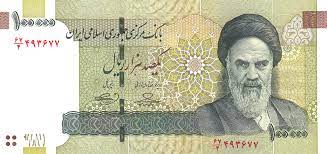
Current rate (June 2026): ~1,300,000–1,375,000 IRR per USD (open market) Official rate: ~42,000 IRR per USD (government transactions only)
The Iranian Rial holds the grim distinction of being the world’s weakest currency in real terms in 2026. A decade of US-led sanctions, oil export restrictions, and domestic inflation averaging over 36% annually had already devastated the Rial. Then, the US–Israel military escalation against Iran in 2025 sent it into freefall. The Central Bank of Iran maintained an official rate of 42,000 per USD for subsidized goods, but this figure has no relationship to the rate at which ordinary Iranians exchange money in the open market.
The Iranian parliament voted in October 2025 to launch a currency redenomination — replacing 10,000 current Rials with 1 new Rial — but implementation is slow and the psychological and economic conditions that drove the collapse have not been addressed.
Saudi/GCC context: Iran’s economic collapse has deepened the divide with its Gulf neighbors. Saudi Arabia, with its USD-pegged Riyal and strong oil revenues, stands in stark contrast. The conflict has also affected trade flows through the Strait of Hormuz, contributing to oil price volatility globally.
Outlook: Without a fundamental resolution to sanctions and a credible monetary stabilization program, the Rial will remain among the most devalued currencies in the world.
2. Lebanese Pound (LBP) — The World’s Weakest by Official Rate
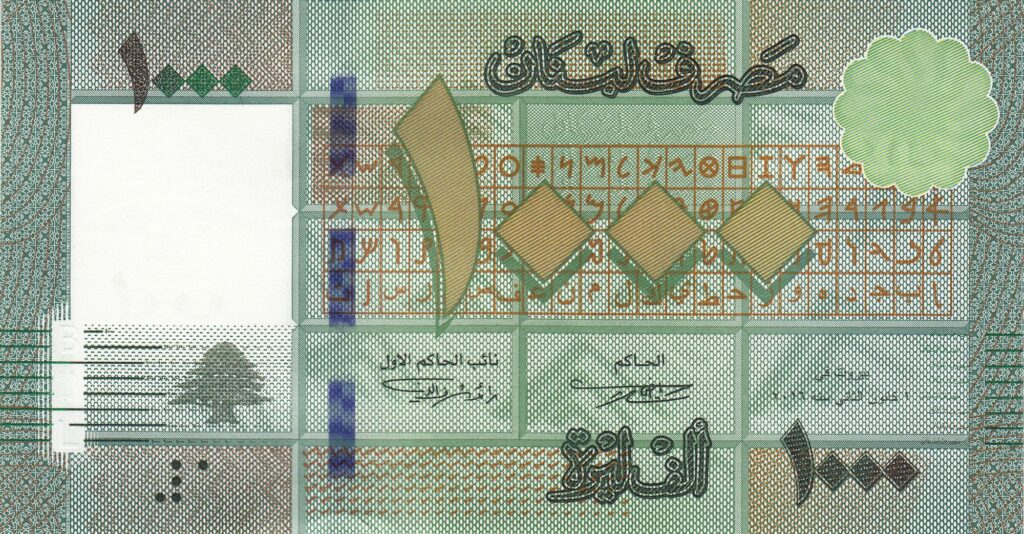
Current rate (June 2026): ~89,700–90,085 LBP per USD
The Lebanese Pound has held the top position on official-rate rankings for years, and 2026 is no different. Trading at roughly 90,000 LBP per USD, it has stabilized at this catastrophically low level — but “stability” is misleading. The structural causes of Lebanon’s crisis remain entirely unresolved: a banking system that has been in de facto collapse since 2019, political deadlock preventing any government from implementing IMF-required reforms, soaring unemployment, and near-total erosion of middle-class savings.
Lebanon borders Syria and Israel — both of which saw active conflict in recent years — compounding the economic pressure. Tourism and the Lebanese diaspora’s remittances remain among the few sources of hard currency flowing into the country.
Saudi/GCC context: There are over 400,000 Lebanese nationals working in the Gulf, with large communities in Saudi Arabia. Remittances sent from the Gulf represent a lifeline for Lebanese families, though the recipient families can only access their savings in degraded local currency.
1 SAR = approximately 24,000 LBP (June 2026)
Outlook: Without IMF structural reforms and a banking restructuring deal, no meaningful recovery is expected. The Pound is likely to remain in the 85,000–95,000 range for the foreseeable future.
3. Vietnamese Dong (VND) — Deliberately Undervalued
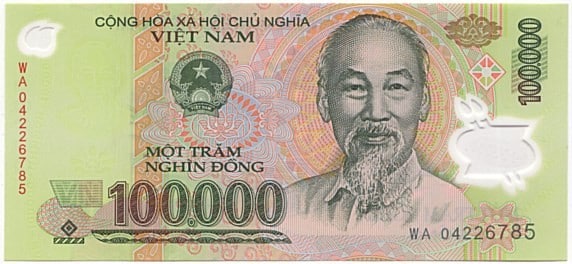
Current rate (June 2026): ~26,319 VND per USD
Unlike most currencies on this list, the Vietnamese Dong’s weakness is not primarily a symptom of economic failure. Vietnam deliberately maintains an undervalued currency to keep its exports competitively priced in global markets. The country’s economy has grown consistently, attracting manufacturing investment from global brands seeking alternatives to China. The State Bank of Vietnam actively manages the Dong’s value within a controlled range.
However, the Dong has weakened further in 2026, reaching 26,319 per USD by May 2026, compared to around 25,000 a year earlier. This is partly driven by elevated US interest rates maintaining dollar strength globally, and partly by trade restrictions affecting Vietnamese export volumes.
Saudi/GCC context: Vietnam is a popular destination for Saudi travelers to Southeast Asia, and the Riyal buys significantly more in Vietnam than in most other tourist destinations. The conversion also matters for the Vietnamese community in Saudi Arabia.
1 SAR = approximately 7,000 VND (June 2026)
Outlook: Vietnam’s managed undervaluation is a deliberate policy choice. The Dong is unlikely to strengthen significantly unless Vietnam’s export competitiveness strategy changes.
4. Laotian Kip (LAK) — Debt-Driven Weakness
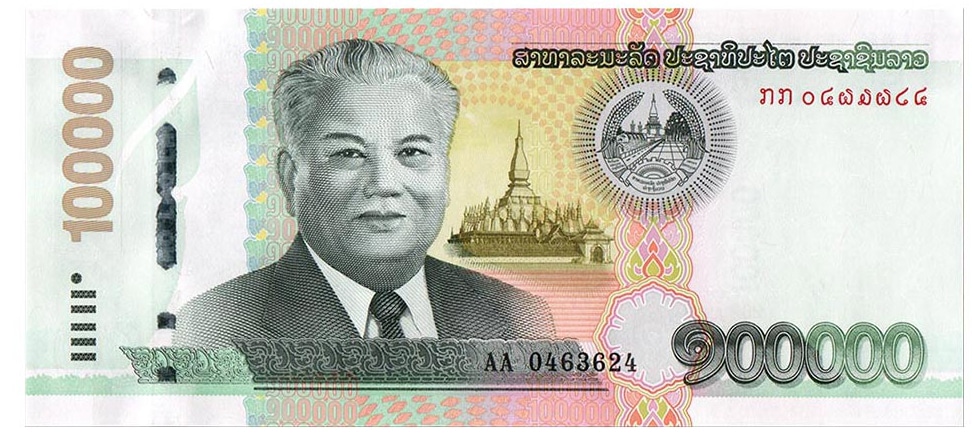
Current rate (June 2026): ~21,971 LAK per USD
Laos is a landlocked Southeast Asian country heavily dependent on hydropower exports to neighboring China and Thailand. The Kip has been under sustained pressure since 2022, when debt servicing obligations — largely owed to China — consumed a disproportionate share of foreign reserves. Inflation has remained elevated, and the country has had limited access to new foreign financing.
The Kip’s weakness is structural rather than cyclical: Laos lacks manufacturing diversification, depends on a small number of commodity exports, and has limited monetary tools to defend the currency.
Saudi/GCC context: Laos is not a significant source of labor migration to Saudi Arabia, but the currency context matters for investors and businesses operating in Southeast Asia.
Outlook: External investment and debt relief negotiations with China would be needed for any meaningful Kip recovery.
5. Sierra Leonean Leone (SLL) — Redenomination Hasn’t Solved the Problem
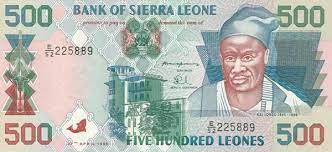
Current rate (June 2026): ~22,600 SLL per USD
Sierra Leone redenominated its currency in 2022, removing three zeros — but as this figure shows, the reform addressed the denomination, not the underlying weaknesses. The Leone remains deeply devalued due to persistent inflation, limited manufacturing capacity, dependence on diamond and iron ore exports, and governance challenges that trace back to the civil war (1991–2002) and subsequent Ebola crisis (2014–2016).
The redenomination is a common pattern: countries remove zeros from their currency to simplify transactions, but without structural reform, the new currency depreciates to similar levels relative to the dollar within a few years.
Saudi/GCC context: Sierra Leone is one of the top-10 source countries for domestic workers in Saudi Arabia. For Sierra Leonean expatriates here, a Saudi Riyal salary converts to a meaningful amount back home.
1 SAR = approximately 6,000+ SLL (June 2026)
Outlook: Continued weakness expected. Sierra Leone needs sustained institutional reform and economic diversification for a durable recovery.
6. Indonesian Rupiah (IDR) — A Weakening Giant
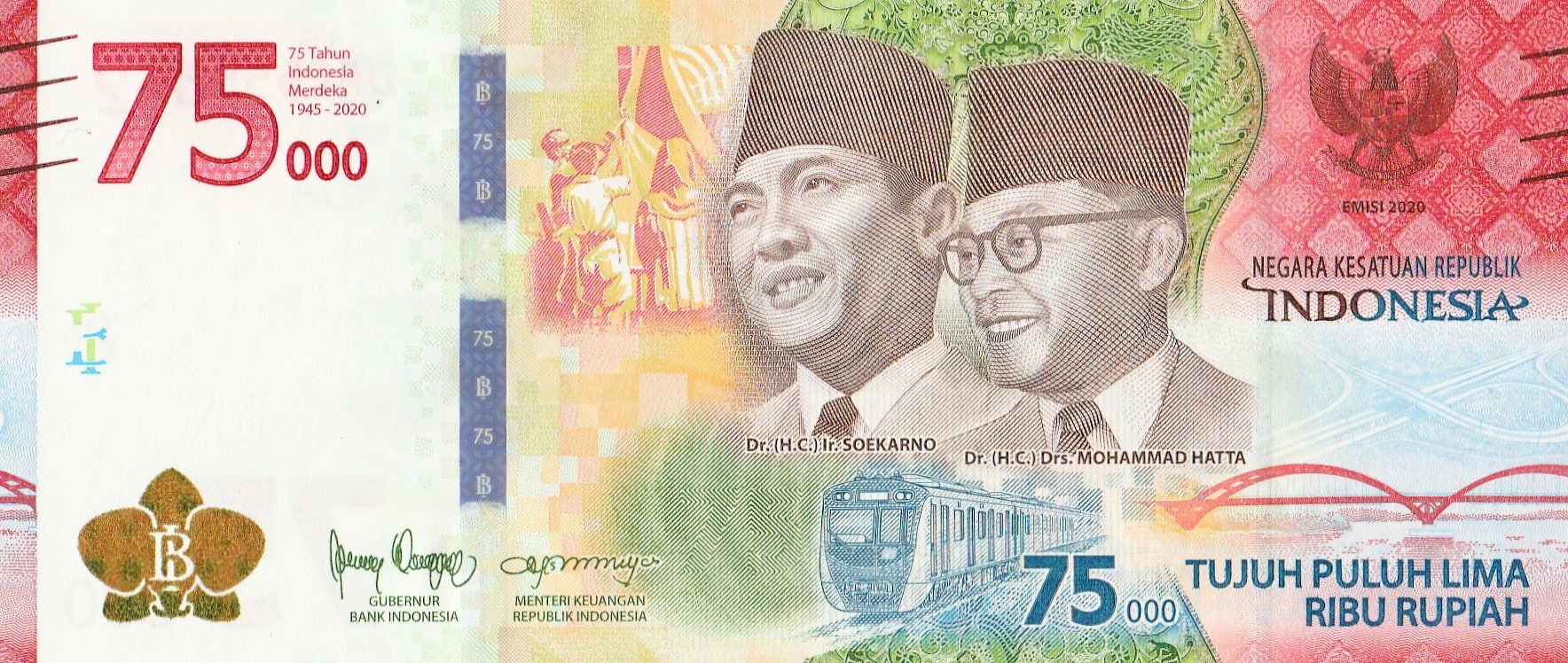
Current rate (June 2026): ~17,420 IDR per USD
Indonesia is the world’s fourth most populous country and Southeast Asia’s largest economy by GDP — yet the Rupiah consistently ranks among the world’s weakest currencies by face value. This reflects a structural feature of the Indonesian economy: heavy import dependency (particularly for energy and manufactured goods), periodic capital flight during global risk-off periods, and inflation pressure that has been exacerbated in 2026 by global recession fears.
The Rupiah lost roughly 570 units against the dollar between January and May 2026 alone — a significant depreciation that analysts link to concerns about global recession and reduced demand for Indonesian commodity exports.
Saudi/GCC context: Indonesia is the largest source country for expatriate workers in Saudi Arabia and other Gulf states, with approximately 3 million Indonesians working in the Kingdom. Every Riyal earned and sent home buys more Rupiah as the IDR weakens — a direct financial benefit for these workers’ families.
1 SAR = approximately 4,600+ IDR (June 2026)
Outlook: The Rupiah is expected to remain in a weak band. Indonesia’s central bank has been intervening to limit depreciation, but structural trade deficits and external debt servicing will continue to pressure the currency.
7. Uzbekistani Som (UZS) — Transition Economy Still Catching Up
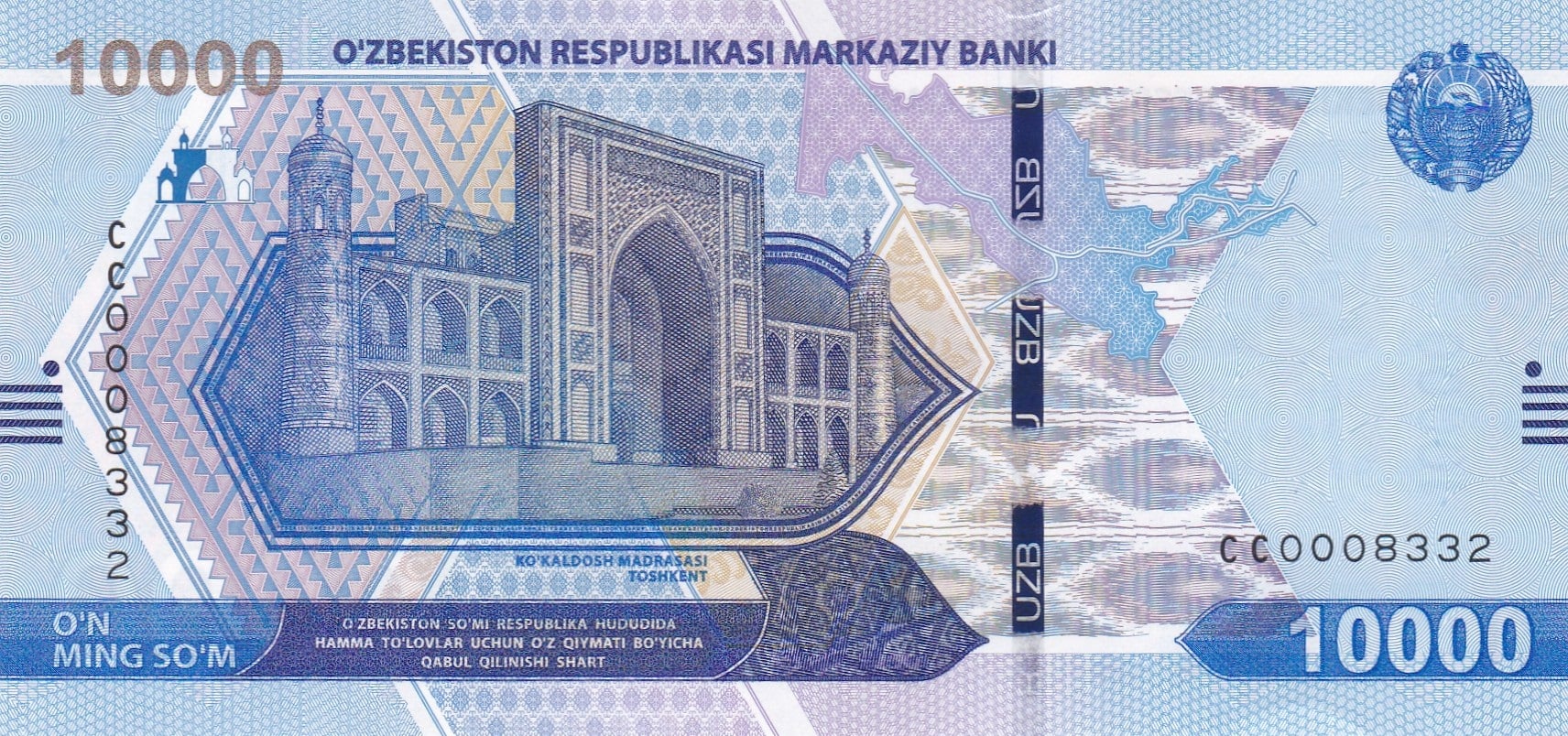
Current rate (June 2026): ~12,800 UZS per USD
Uzbekistan’s Som has been weak since the country’s independence from the Soviet Union in 1991 and the subsequent currency reform. For decades, Uzbekistan maintained strict capital controls and a fixed exchange rate, creating a black market. Post-2017 reforms opened the economy more to market forces, but the Som’s low nominal value has persisted alongside structural inflation and limited export diversification.
The economy is growing — Uzbekistan has attracted investment in tourism, mining, and agriculture — but the currency’s face value remains low and is unlikely to change significantly without redenomination.
Saudi/GCC context: There is a growing Uzbek workforce in Saudi Arabia, particularly in construction and hospitality. The weak Som makes Gulf salaries very attractive relative to purchasing power at home.
Outlook: Gradual improvement possible with continued reform, but no dramatic strengthening expected.
8. Guinean Franc (GNF) — Mineral Wealth, Currency Poverty
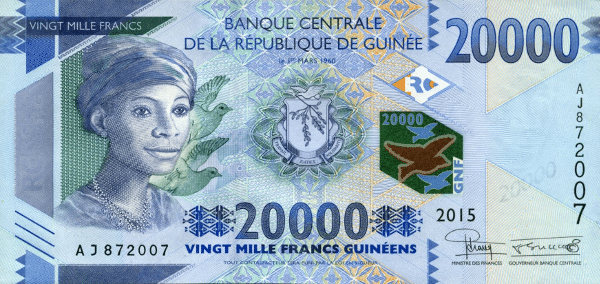
Current rate (June 2026): ~8,600 GNF per USD
Guinea is one of the world’s most mineral-rich countries, holding the world’s largest bauxite reserves, significant gold deposits, and diamonds. Yet the Guinean Franc remains chronically weak. Political coups — most recently in 2021 — have repeatedly disrupted economic planning, scared off foreign investment, and undermined fiscal discipline. The economy’s dependence on raw mineral exports, combined with weak governance, creates persistent inflationary pressure and limited ability to build foreign reserves.
Saudi/GCC context: Guinea is a Muslim-majority country with cultural ties to the Gulf, and a growing number of Guinean workers are employed in Saudi Arabia. The Riyal’s purchasing power back home is exceptionally high.
Outlook: Until political stability is established and the government can convert mineral wealth into broadly shared economic growth, the GNF will remain weak.
9. Paraguayan Guarani (PYG) — Structurally Undervalued
Current rate (June 2026): ~7,400 PYG per USD
Paraguay’s Guarani is the only South American currency on this list. The country has a relatively small economy dependent on soy and beef exports, with significant informal economic activity and limited global financial integration. The Guarani has weakened steadily over decades without any dramatic collapse, reflecting chronic low-level inflation, current account deficits, and limited monetary credibility.
Notably, Paraguay is one of two countries in the world that officially recognizes Taiwan rather than China — a geopolitical position that limits some economic partnerships.
Saudi/GCC context: Paraguay has minimal direct ties to Saudi Arabia, but the currency context matters for import-export businesses and investors tracking Latin American exposure.
Outlook: The Guarani is expected to continue its slow, steady depreciation. No catalyst for significant strengthening is on the horizon.
10. Zimbabwean ZiG (ZWG) — A New Currency, Old Problems
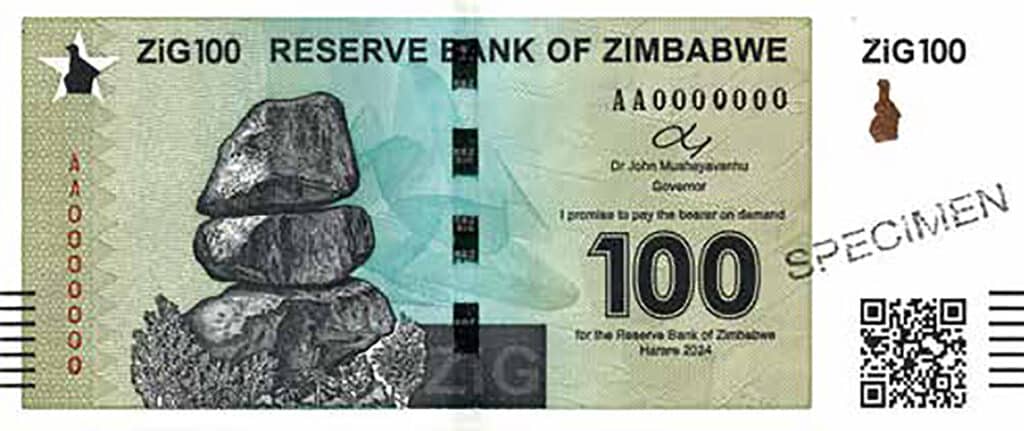
Current rate (June 2026): ~26–27 ZWG per USD
Zimbabwe introduced the ZiG (Zimbabwe Gold) in April 2024, replacing the failing Zimbabwean Dollar as part of yet another attempt to anchor its monetary system. Unlike previous currencies, the ZiG is officially backed by gold and other precious mineral reserves held by the Reserve Bank of Zimbabwe. This gold-backing has provided some stability: the ZiG has held within a 25–27 range for much of 2026, a far cry from the hyperinflationary episodes that destroyed multiple previous Zimbabwean currencies.
However, Zimbabwe’s underlying economic challenges — fiscal deficits, limited foreign investment, political uncertainty — mean the ZiG remains vulnerable. A 1,000:1 redenomination means the face value looks stronger than historical currencies, but economic fundamentals still rank Zimbabwe among the world’s weakest currency economies.
Saudi/GCC context: Zimbabwe has a small but active diaspora in the Gulf. Gulf Riyal remittances convert to substantial ZiG amounts, and the gold-backing has given remittance recipients slightly more confidence in holding local currency.
Outlook: The gold-backing is a genuine stabilizing factor compared to previous currencies, but Zimbabwe needs broader fiscal reform and investment to sustain the ZiG’s credibility long-term.
Honorable Mentions: Other Weak Currencies in 2026
Syrian Pound (SYP): After losing 99% of its value since the civil war began in 2011, Syria launched a new managed-float exchange rate in January 2026. The official rate now sits around 115.5 SYP per USD — dramatically stronger than the black-market rate from prior years — but this reflects a new policy framework, not an economic recovery. The gap between official and black-market rates remains a persistent problem.
Sudanese Pound (SDG): Ongoing civil conflict and economic sanctions have accelerated depreciation, with the Pound trading at thousands per USD. Sudan’s crisis has intensified since the outbreak of armed conflict between military factions in 2023.
Malagasy Ariary (MGA): Trading around 4,500+ per USD, Madagascar’s currency reflects poverty, limited reserves, and low industrial capacity.
Venezuelan Bolívar (VES): Venezuela has removed over 13 zeros from its currency through successive redenominations since 2008. The current Bolívar trades at several per USD, but the hyperinflationary environment means this changes rapidly.
Why Currencies Become Weak: The Six Root Causes
Understanding why a currency is weak is as important as knowing its exchange rate. Six factors appear consistently across every currency on this list:
1. Hyperinflation — When a central bank prints money to cover government deficits, the currency supply outpaces the economy’s output, destroying purchasing power. Iran and Zimbabwe are the clearest examples.
2. International sanctions — Sanctions cut off a country from global dollar trade, reduce foreign exchange earnings, and destroy investor confidence. Iran’s Rial is the most extreme current example.
3. Political instability and conflict — Wars, coups, and governance crises destroy economic infrastructure, scare away investment, and force fiscal mismanagement. Lebanon, Syria, and Guinea all illustrate this.
4. Banking system collapse — When citizens and businesses lose trust in banks and try to convert savings to hard currency, the local currency faces a sustained sell-off. Lebanon’s 2019 banking crisis is the defining modern example.
5. Deliberate policy undervaluation — Some weak currencies are not symptoms of failure but tools of policy. Vietnam, and to a lesser extent Indonesia, keep their currencies undervalued to boost exports.
6. Structural trade deficits and debt — When a country consistently imports more than it exports and accumulates foreign debt, it needs to sell its own currency to buy foreign currency, pushing the exchange rate down. Laos and Paraguay represent this pattern.
The Saudi Riyal: A Counterpoint to Currency Weakness
The Saudi Riyal (SAR) provides the sharpest possible contrast to the currencies on this list. Fixed at 3.75 SAR per USD since 1986 — over 40 years — the Riyal is one of the world’s most stable currencies by any measure. This stability rests on three pillars:
- Oil revenues — Saudi Aramco and the Kingdom’s oil production generate massive dollar inflows, giving the central bank (SAMA) continuous access to USD to maintain the peg.
- Large foreign reserves — Saudi Arabia holds hundreds of billions of dollars in foreign reserves through SAMA and the Public Investment Fund (PIF), providing a buffer against any speculative pressure on the Riyal.
- Institutional credibility — SAMA has maintained the peg without interruption through oil price crashes, regional conflicts, and global financial crises, giving markets confidence that the peg will hold.
For the millions of expatriate workers in Saudi Arabia who send remittances home to countries like Indonesia, Pakistan, the Philippines, India, and African nations, the Riyal’s stability is not an abstract financial concept — it is the foundation of their families’ financial security.
What Does Currency Weakness Mean for Saudi Travelers and Expats?
If you hold SAR and are planning to travel, or if you are sending money home from Saudi Arabia, currency weakness in destination countries directly affects your purchasing power:
- Vietnam: SAR 1 ≈ 7,000 VND — excellent value for tourism, shopping, and food
- Indonesia: SAR 1 ≈ 4,600+ IDR — strong purchasing power for a major tourist destination
- Lebanon: SAR 1 ≈ 24,000 LBP — dramatically high local purchasing power, though the country’s infrastructure remains challenged
- Sierra Leone: SAR 1 ≈ 6,000+ SLL — remittances have exceptional local impact
For expatriates sending money home, the combination of a stable Riyal and a weakening home currency means your family receives more local currency per Riyal sent — a real financial benefit of working in the Kingdom.
Frequently Asked Questions
By open-market rates, the Iranian Rial (IRR) is the weakest currency in the world in 2026, trading at over 1.3 million IRR per US dollar. By official/pegged rates, the Lebanese Pound (LBP) holds the title at approximately 90,000 LBP per USD.
The Rial entered 2025 at around 817,500 per USD and crashed to 1.42 million by December 2025, driven primarily by the US–Israel military strikes on Iran (the Twelve-Day War in June 2025), which accelerated the impact of existing sanctions. By June 2026, the open-market rate remains above 1.3 million IRR per USD, with annualized inflation above 36%.
By official rates used in everyday commerce, yes — the Lebanese Pound (LBP) trades at approximately 89,700–90,000 per USD in June 2026. However, if Iran’s open-market rate is used, the Iranian Rial has overtaken it.
The Iranian Rial (IRR) is the weakest currency in Asia by market rate. The Lebanese Pound (LBP) follows at official rates. Other weak Asian currencies include the Vietnamese Dong (VND), Laotian Kip (LAK), and Syrian Pound (SYP).
The Sierra Leone (SLL) and Guinean Franc (GNF) are consistently among Africa’s weakest currencies by face value. The Sudanese Pound and Malagasy Ariary are also deeply devalued.
The five strongest currencies in 2026 are the Kuwaiti Dinar (KWD), Bahraini Dinar (BHD), Omani Rial (OMR), Jordanian Dinar (JOD), and British Pound (GBP). The Saudi Riyal, while not highest by face value, is one of the most stable due to its long-standing peg to the US dollar.
The Saudi Riyal has been pegged to the US dollar at 3.75 since 1986. It is backed by Saudi Arabia’s large oil revenues, massive foreign exchange reserves managed by SAMA, and institutional credibility built over four decades of maintaining the peg without interruption. Lebanon, by contrast, abandoned its dollar peg in the early 2020s after foreign reserves were depleted by years of fiscal deficits and capital flight.
In 2026, one US dollar has the highest purchasing power in countries with the most devalued currencies. At open-market rates, 1 USD buys over 1.3 million Iranian Rials. At official rates, 1 USD buys approximately 90,000 Lebanese Pounds.
Yes, though it requires structural change rather than just redenomination. Successful recoveries have typically involved credible fiscal reform, IMF-supported stabilization programs, and restoration of foreign reserve buffers. Zimbabwe’s gold-backed ZiG represents an early attempt at a structurally backed recovery, though it remains early to declare success.
The main causes are: hyperinflation from excessive money printing; international sanctions that cut off foreign exchange earnings; political instability or conflict that destroys economic confidence; banking system collapse; deliberate policy undervaluation to boost exports; and chronic trade deficits combined with high foreign debt.
For expatriates from countries with weak currencies (Indonesia, Philippines, Pakistan, India, Lebanon, Sierra Leone, etc.), earning in Saudi Riyals and sending money home in local currency means their remittances have greater local purchasing power the weaker the home currency becomes. This is one reason Gulf employment remains highly sought after in these countries.
Conclusion
The weakest currencies in the world in 2026 tell a story of economic fragility, geopolitical pressure, and institutional failure. The Iranian Rial has become the most devalued currency in the world by real market rates, driven by sanctions and the fallout from military escalation. The Lebanese Pound remains near the top by official rates, with no structural recovery in sight. Across Southeast Asia, Vietnam and Indonesia face managed or worsening weakness, while Sierra Leone and Guinea represent Africa’s ongoing currency challenges.
By contrast, the Saudi Riyal stands as one of the most reliable currencies in the world — a reflection of the Kingdom’s oil wealth, fiscal management, and institutional discipline at SAMA. For the millions of expats working in the Kingdom and sending money home to countries on this list, that stability is a foundational financial advantage.
Exchange rates referenced in this article are sourced from TradingEconomics, XE.com, and Wise as of June 2026. Currency markets fluctuate constantly; always verify current rates before making financial decisions.
This article is updated regularly.
DISCLAIMER:
This blog post is for informational purposes only. We make every effort to provide accurate, current, and well-sourced information, but we cannot guarantee its completeness or absolute accuracy.
All images, videos, and logos used on this page belong to their respective owners. We aim to credit and reference them appropriately. If you are the rightful owner and wish to have your image, video, or logo removed, please contact us.

In my content writing journey, I’ve discovered a deep passion for delving into politics, culture, and history. Saudiscoop has been my chosen platform, resonating with my interests. Beyond writing, I thrive on debating and devouring political literature. While my focus lies in detailed explanations, I relish the challenge of diverse topics. My goal is to create immersive, enlightening pieces that captivate while exploring intricacies.