
Quick Answer
The best free parking near Masjid Al-Haram in Makkah is Kudai Parking, located around 3.5 to 5 km from the Haram. Taxis usually cost SAR 10 to 15, and a SAPTCO shuttle has operated from Kudai during Ramadan; fares, schedules, and hours are seasonal, so confirm before you travel. The closest free parking areas are Al Hajoon and Maskhoutah, both within a 5 to 12-minute walk from the mosque. The closest paid parking option is Jarwal Parking, about 1.8 km away, with rates starting around SAR 10 per hour. During Hajj season, non-resident vehicles are restricted from central Makkah and redirected to official outer parking hubs connected by shuttle buses.
There are multiple parking facilities near the Masjid Al-Haram, and you can find free or paid parking areas at different distances from the Haram.
Quick Facts
- Best free parking: Kudai Parking with long opening hours and, in past Ramadans, a SAPTCO shuttle service
- Closest free parking by walking: Al Hajoon (5 to 12-minute walk) and Maskhoutah (around 5 minutes after tunnel access)
- Best for drivers arriving from Jeddah or Madinah: Rasifa/Rusaifa Parking, around 4 km east of Haram
- Closest paid parking: Jarwal Parking, around 1.8 km from Masjid Al-Haram
- Hotel parking: Available for hotel guests near Ajyad and central Haram hotels
- Best free options during peak season: Kudai, Maskhoutah, Rusaifa, and Hajoon
- Hajj season rules: vehicle access around the Holy Sites is restricted each season; follow official seasonal notices
- Paid parking app: Mawgif app by the National Parking Company
- Paid parking payment methods: Mawgif app, kiosks, coins, or dashboard receipt system
- Overstay fines: set by the operator and may change; check on-site signage or the official app
- Restricted-zone parking during Hajj: penalties can be severe; avoid restricted zones entirely
- SAPTCO Ramadan shuttle from Kudai: seasonal service; confirm the current fare before travel
- Kudai distance from Haram: Around 3.5 to 5 km
- Google Maps location for Kudai: 9RVG+HFH, Makkah–Jeddah Highway
Why Parking Near Masjid Al-Haram Is Difficult
Masjid Al-Haram is the largest mosque in the world by capacity, receiving millions of pilgrims during Hajj and Umrah seasons and millions more during Ramadan and daily visits by Makkah residents. The area within 1 to 2 km of the Grand Mosque is among the most heavily managed urban spaces on earth, with vehicle access controlled differently depending on the season, visitor category, and vehicle registration.
For day visitors and residents driving to pray, the challenge is real: the immediate Haram area is restricted, hotel parking is reserved for guests, and the streets are constantly monitored. Understanding the full map of options before you arrive saves significant time, money, and frustration.
This guide covers every free and paid parking option in 2026, organized by distance from the Haram, with specific notes on Hajj season restrictions, Ramadan shuttle services, paid parking procedures, and the fine structure for violations.
Free Parking Near Masjid Al-Haram Makkah
1. Kudai Parking (كدي)
Distance from Haram: 3.5 to 5 km (4.83 km by road) Cost: Free Hours: has been open around the clock in the past; hours can vary seasonally, so confirm on arrival Taxi to Haram: SAR 10 to 15 SAPTCO shuttle (Ramadan): seasonal service — confirm the current fare before travel Google Maps: Search “Kudai Parking Makkah” or enter 9RVG+HFH, Makkah-Jeddah Hwy, Jeddah 24234
Kudai is the most widely used and most reliably available free parking area near Masjid Al-Haram. It is a large lot with many spaces, so it is usually the easiest place to find a spot, though during peak Ramadan weeks demand is extremely high and early arrival is essential.
The lot has been open around the clock in the past, making it a good option for night prayers (Tahajjud, Fajr); confirm current hours on arrival.
During Ramadan: Kudai is a popular parking option in Makkah during Ramadan, and SAPTCO has in past years operated a dedicated shuttle bus service from Kudai to the Haram during the month. Confirm the current schedule and fare with official SAPTCO channels or seasonal transport notices before you travel. This is significantly cheaper and more reliable than a taxi at peak Iftar and Tarawih prayer times. The shuttle route runs regularly, and the round-trip fare makes it practical for multiple visits in a single day.
During Hajj season: SAPTCO takes over the entire Kudai parking area for Hajj operations. No private vehicles are permitted to use Kudai during the official Hajj season (approximately the first 10 days of Dhul Hijjah). If you are driving during Hajj, use alternative parking hubs designated by the Transport General Authority.
Tip: Take a photo of your parking spot as soon as you park. Kudai is very large, and multiple identical-looking rows can cause confusion on return. Note the row letter or number before walking away.
2. Al Hajoon Parking (الحجون)
Distance from Haram: Approximately 1.5 to 2 km Walking time: 10 to 12 minutes Cost: Free Connection: Walk or taxi
Al Hajoon is the favorite free parking choice for visitors who do not mind a short walk to the Haram. Located near the Jannat Al-Mualla cemetery (the historic burial ground of the Prophet’s family and companions), it sits significantly closer to the Grand Mosque than Kudai and eliminates the need for a shuttle or taxi for most able-bodied visitors.
Most pilgrims who choose Al Hajoon prefer it precisely for this reason: the 10 to 12-minute walk is manageable, the area is familiar and well-signposted, and the parking is entirely free with no shuttle cost. During night prayers in Ramadan, the walk is particularly pleasant in the cooler temperatures.
Best for: Local Makkah residents and frequent visitors who know the route well; visitors on shorter trips who prefer walking to waiting for transport.
3. Maskhoutah Parking (المسخوطة)
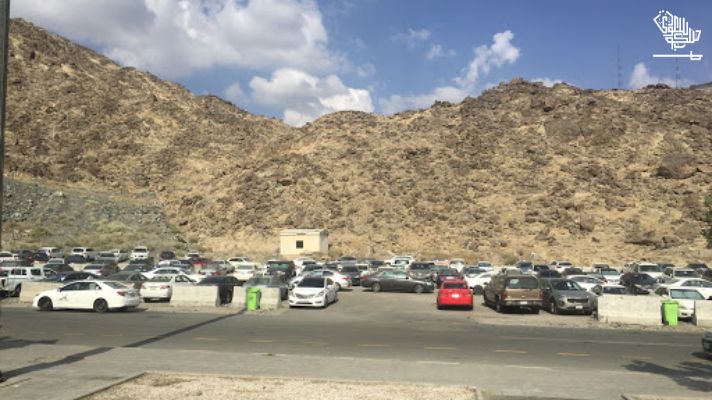
Distance from Haram: Approximately 1 km Walking time: 5 minutes (after the tunnel) Cost: Free Access: Located before the Al-Maskhoutah tunnel on the road toward the Haram
Maskhoutah is one of the most convenient free parking areas because of its proximity. Located before the Al-Maskhoutah tunnel on the road leading to the Grand Mosque, visitors park here and cross the tunnel on foot, arriving near the Haram in approximately 5 minutes.
The trade-off for this proximity is availability: Maskhoutah is smaller than Kudai and fills quickly during peak prayer times, Ramadan, and Umrah season. The key to using it successfully is arriving outside of peak windows (before 11pm on Ramadan evenings, before dawn prayer rush in regular periods).
Best for: Short visits; arriving outside peak periods; those with mobility considerations who need minimal walking.
4. Rasifa/Rusaifa Parking (الرصيفة)
Distance from Haram: Approximately 4 km (east of the Haram). Cost: Free. Taxi to Haram: SAR 15. Best approach: Via the eastern road from Jeddah or Madinah
Rasifa is the best free parking choice for drivers arriving from Jeddah or Madinah. Located 4 kilometers east of Masjid Al-Haram, it sits along the eastern approach road and avoids the congestion of the western and northern entry points that serve most Makkah visitors.
If you are driving from Jeddah on the main highway, Rasifa appears before the more congested central access routes and is easy to enter and exit. Taxis from Rasifa to the Haram cost SAR 15.
Best for: Jeddah and Madinah drivers; avoiding the western approach congestion; straightforward entry and exit from the eastern road.
5. Hajoon/Masjid Aisha Parking
Distance from Haram: Approximately 5 km Cost: Free Taxi to Haram: SAR 5 per person (shared taxi common) Notable landmark: Near Masjid Aisha (Masjid Aisha is where pilgrims in Makkah put on ihram for Umrah)
Located near Masjid Aisha and surrounded by an area that pilgrims already visit before Umrah, this parking area serves a double purpose: visitors can park here before performing tawaf for Umrah, then continue to the Haram by taxi. The SAR 5 per person shared taxi fare makes it one of the most affordable parking and transport combinations available.
Best for: Umrah pilgrims already intending to pass by Masjid Aisha; cost-conscious visitors.
6. Nafeeh Parking
Distance from Haram: South of the city center. Cost: Free (for early arrivals). Notes: Smaller capacity; best for short stays; less known than Kudai or Hajoon
Nafeeh is a less publicized free parking spot in the southern section of the city, suited for short stays and for visitors who arrive early in the day before it fills. It does not offer shuttle connections and operates on a first-come basis. Best suited for Makkah residents familiar with the area’s road layout.
7. Qashlah Parking
Distance from Haram: Approximately 2 km Cost: Free Notes: A viable free option closer than Kudai; generally less crowded than Hajoon
Qashlah is a free parking area approximately 2 kilometers from Masjid Al-Haram. It is less frequently referenced than Kudai or Hajoon, which means it sometimes offers available spaces when others are full. A useful backup when Hajoon is full.
8. Hajj Peripheral Parking Hubs
During the Hajj season (approximately the first 10 days of Dhul Hijjah), official peripheral parking hubs are established at the main city entrances. These are large designated areas operated by the Transport General Authority and connected to the Haram via dedicated shuttle buses. During Hajj, these are the only official parking options for vehicles entering Makkah without a resident registration or official Hajj transport permit.
Shuttle buses from Hajj hubs: Operate on regular, managed schedules directly to the Haram. Drop-off and pick-up are at specific Haram gate zones assigned per hub.
Paid Parking Near Masjid Al-Haram Makkah
Paid parking provides the advantage of proximity: some paid lots are within easy walking distance of the Haram. The trade-off is cost, especially during peak periods when rates can reach SAR 20-30 per hour.
1. Jarwal Parking
Distance from Haram: 1.8 km Cost: Approximately SAR 10 per hour Access: On Ibrahim Al Khalil Road, Jarwal district
Jarwal is the closest managed paid parking to Masjid Al-Haram that is available to general visitors (not restricted to hotel guests). At 1.8 km, the walk to the Haram is feasible for most visitors, especially in cooler months. It is a popular choice for 1- to 2-hour visits, which makes the per-hour cost manageable.
Best for: Short visits; access to the Ibrahim Al Khalil Road corridor; visitors who prioritize proximity over cost.
2. Ibrahim Khalil Road Roadside Bays
Distance from Haram: Varies; some bays within 1 to 1.5 km Cost: Approximately SAR 10 per hour (metered) Access: Roadside parking bays on Ibrahim Al Khalil Road
On-street metered parking is available along sections of Ibrahim Al Khalil Road. These roadside bays provide some of the closest parking to the Haram available to general visitors. Pay via coin meter, kiosk, or the Mawgif app. Keep the receipt visible on the dashboard.
3. Misflah Parking (المسفلة)
Distance from Haram: Within walking distance of the Misflah area. Cost: Paid (managed lot) Notes: Reliable space even during Ramadan; Misflah is one of the most consistent options for paid parking during heavy prayer periods
Misflah is a district south of Masjid Al-Haram that has both on-street metered parking and managed lots. The area is reliably accessible even during Ramadan evenings, when northern and western approaches become gridlocked, because it lies near the Haram on the southern side.
4. Hotel Car Parks (Guests Only)
Examples: Makarem Ajyad Makkah Hotel (5-minute walk to Haram), Hilton Suites Makkah, Makkah Towers, Swissotel, Fairmont Makkah Clock Royal Tower
Hotel parking near the Haram is, in almost all cases, exclusively for registered hotel guests. Rates typically range from SAR 10 to SAR 30 per hour during regular seasons, rising significantly during peak Hajj periods.
For visitors staying at one of the Haram-adjacent hotels, parking is the most convenient option: the walk to the mosque takes minutes rather than kilometers.
If you are not staying at the hotel: Do not use hotel parking. Hotels enforce guest-only policies, and unauthorized vehicles are towed, particularly during Hajj and Ramadan, when every space is needed for guests.
People Also Ask: Can I Drive My Car to Masjid Al-Haram?
Short answer: You can drive to the Makkah area, but private vehicle access to the immediate Haram area (within approximately 1 km of the mosque) is heavily restricted, especially during Hajj and Ramadan.
For regular visits outside peak seasons, driving to a free parking area (Kudai, Hajoon, Maskhoutah) and taking a taxi or walking is the standard approach for Makkah residents and regular visitors. The road layout directly around the Grand Mosque is predominantly pedestrian-priority, with vehicle access controlled by the Makkah municipality and the Saudi traffic police.
For the Hajj season, non-resident vehicles are not permitted in the central zones. UAE-registered and other GCC vehicles driving for Hajj must follow the official peripheral parking hub system and may face fines up to SAR 20,000 for entering restricted central Makkah zones without valid permits.
People Also Ask: Is There Free Parking Near Masjid Al-Haram?
Yes. Multiple free parking areas exist near Masjid Al-Haram. The best and most consistently available options are:
- Kudai: Largest, most reliable, 24/7, 3.5 to 5 km from Haram. Best overall for Ramadan.
- Al Hajoon: Closest free parking with a reasonable walk (10 to 12 minutes) at no cost.
- Maskhoutah: Very close (5 minutes after the tunnel) but limited capacity.
- Rasifa: Best for Jeddah and Madinah drivers, 4 km east.
- Qashlah: 2 km, often less crowded than the main options.
Free parking is not available directly adjacent to the Haram. All free lots require either walking (10 to 15 minutes) or a short taxi/shuttle ride.
People Also Ask: How Much Does Parking Cost Near Masjid Al-Haram?
Paid parking costs:
- On-street metered bays (Ibrahim Khalil Road): approximately SAR 10 to 11.50 per hour
- Managed lots (Jarwal area): approximately SAR 10 per hour
- Hotel parking (Makkah Towers, Fairmont, Hilton): SAR 10 to SAR 30 per hour; significantly higher during Hajj and Ramadan peak
Free parking costs:
- Kudai, Hajoon, Maskhoutah, Rasifa, Hajj hubs: SAR 0
- Taxi from Kudai to Haram: SAR 10 to 15
- SAPTCO Ramadan shuttle from Kudai: seasonal — confirm the current fare
Overstay fine: SAR 230 for overstaying paid parking
People Also Ask: What Is the Kudai Parking Makkah-to-Haram Bus?
The Kudai to Haram bus is a SAPTCO-operated shuttle bus service that runs between Kudai free parking and Masjid Al-Haram. Key details:
- Operates: Full season during Ramadan, 24 hours a day
- Fare: seasonal — confirm the current fare before travel
- Frequency: Regular departures, with very high frequency during Iftar and Tarawih prayer times
- Travel time: 10 to 15 minutes, depending on traffic
- Boarding point: Within the Kudai parking area, at the designated SAPTCO bus bays
Outside Ramadan, regular taxis and Uber/Careem operate from Kudai to the Haram for SAR 10-15 per trip. The shuttle is Ramadan-specific and does not operate during the rest of the year on the same schedule.
People Also Ask: Where Is Kudai Parking in Makkah?
Kudai parking location: 9RVG+HFH, Makkah-Jeddah Highway, Kudai district, Jeddah 24234
On Google Maps: search “Kudai Parking Makkah” or “Kudai free parking” and the large lot appears on the Jeddah-Makkah Highway approach to the city.
Kudai is located in the southwestern approach to Makkah, positioned along the main Makkah-Jeddah Highway. Drivers arriving from Jeddah encounter Kudai before entering the more congested central Makkah streets, making it easy to stop before reaching the heavier traffic around the Haram.
Distance and transport summary:
- Distance from Haram: 3.5 to 5 km by road
- Taxi fare: SAR 10 to 15 (negotiated at the lot)
- Uber/Careem: Available from the lot
- SAPTCO shuttle (Ramadan only): seasonal — confirm the current fare
People Also Ask: Can Non-Muslims Visit Masjid Al-Haram, Makkah?
No. Makkah is restricted exclusively to Muslims. Non-Muslims cannot enter the city of Makkah at any time, including all parking areas listed in this guide. Checkpoints operate on the main road approaches to Makkah checking for valid Umrah, Hajj, or residency permits. Non-Muslims planning to visit Saudi Arabia should note that while they are welcome throughout the rest of the Kingdom, Makkah and its surrounding areas remain restricted.
People Also Ask: What Is the Mawgif App and How Do I Use It for Parking?
Mawgif (موقف) is Saudi Arabia’s official parking payment app operated by the National Parking Company. It is used for paid parking areas across Saudi cities, including Makkah’s managed and on-street paid lots near the Haram.
How to use Mawgif:
- Download the Mawgif app from Google Play or the Apple App Store
- Register with your Saudi mobile number and vehicle plate number
- Open the app on arrival at a paid parking zone
- Enter or confirm your parking location (GPS-based or manual entry of parking zone number)
- Select your parking duration
- Pay via card (credit/debit), Apple Pay, or STC Pay
- A digital receipt is generated; in some locations, a paper receipt from a kiosk is also required on the dashboard
Important note on Mawgif: Print or display your digital receipt or kiosk receipt visibly on your dashboard. Enforcement officers check physical receipts on the dashboard. App payment alone, while valid, may not prevent a fine if the officer does not check the app and only sees that there is no paper receipt. This is a documented issue reported by multiple Mawgif users; always print or show the receipt prominently.
Payment methods at kiosks: Coins, cash, credit/debit cards. Some Makkah kiosks near the Haram accept both Mada and international cards.
People Also Ask: What Is the Fine for Illegal Parking Near Masjid Al-Haram?
Overstay fine: SAR 230 for overstaying your purchased parking time in managed or metered zones.
Parking without payment: SAR 100 to 230 Mawgif fine for parking in paid zones without a valid ticket.
Parking in restricted zones during Hajj: Up to SAR 20,000 for non-resident vehicles parked in central restricted zones during the official Hajj season. This applies particularly to GCC-registered vehicles (UAE, Kuwait, Bahrain) driven by Hajj pilgrims who enter the central Makkah zones without permits.
Parking in fire lanes or emergency access zones: Higher fines apply, and vehicles are towed.
General principle: Never park on yellow lines, in tow-away zones, or in areas marked with Arabic text prohibiting stopping. When in doubt, use the designated free or paid parking lots listed above rather than roadside parking in unmarked locations near the Haram.
Hajj Season 2026: Parking Rules for Pilgrims
Hajj 1447 AH falls on Arafat Day on 26 May 2026. The official Hajj season parking restrictions apply from approximately 1 Dhul Hijjah (approximately 18 May 2026) through 15 Dhul Hijjah.
Restrictions during Hajj:
- Private vehicles (non-Makkah-registered) are directed away from central Makkah during the Hajj season
- Kudai parking is taken over entirely by SAPTCO for Hajj operations; no private vehicles permitted
- All pilgrims arriving by private vehicle must use designated peripheral parking hubs at city entrance points
- Designated shuttle buses connect peripheral hubs to the Haram and Hajj sites
- Vehicles parked in restricted central zones during the Hajj face fines and towing
For GCC residents driving to Makkah for Hajj:
- A valid Hajj permit on the Nusuk platform is required before entering Makkah
- A passport and visa must have at least 6 months’ validity
- Insurance covering Saudi Arabian roads is required
- Entry is checked at Al Batha and other border/checkpoint entries to Makkah
- Arrange Hajj transport through the official SAPTCO or Transport General Authority systems; do not rely on private parking in the central zones
All Parking Options at a Glance: Distance and Cost Table
| Parking Area | Distance to Haram | Cost | Connection | Best Season |
|---|---|---|---|---|
| Kudai | 3.5 to 5 km | Free | Taxi SAR 10-15 / SAPTCO shuttle in Ramadan (fare varies) | Ramadan, year-round |
| Al Hajoon | 1.5 to 2 km | Free | 10-12 min walk or taxi | Year-round |
| Maskhoutah | ~1 km | Free | Backup when Hajoon is full | Off-peak periods |
| Rasifa (Rusaifa) | 4 km (east) | Free | Taxi SAR 15 | Jeddah/Madinah drivers |
| Hajoon/Masjid Aisha | ~5 km | Free | Taxi SAR 5 pp | Umrah visitors |
| Nafeeh | South of centre | Free | Walk | Short visits, early morning |
| Qashlah | ~2 km | Free | Walk or taxi | Backup when Hajoon full |
| Hajj Hubs | City periphery | Free | Official shuttle | Hajj season only |
| Jarwal | 1.8 km | ~SAR 10/hr | Walk | Short paid visits |
| Ibrahim Khalil Road | 1 to 1.5 km | ~SAR 10-11.50/hr | Walk | Quick proximity |
| Misflah | Near Haram | Paid | Walk | Ramadan reliability |
| Hotel lots | Steps from Haram | SAR 10-30/hr | Walk | Guests only |
People Also Search: Related Makkah Parking Topics
Kudai parking shuttle timings Ramadan: SAPTCO has in past years operated a shuttle from Kudai during Ramadan; schedules and fares are set seasonally. Check official SAPTCO channels or the official Makkah city guide (discovermakkah.sa) before travel; no advance booking has been required.
Parking near Masjid Al-Haram for Umrah visitors: Free lots (Kudai, Hajoon, Maskhoutah) all serve Umrah visitors. For Umrah pilgrims arriving at KAIA airport and collecting a car, Kudai is the recommended starting parking area for subsequent Haram visits.
Parking near the Haram during Ramadan: Kudai is the unanimous recommendation due to its size, the SAPTCO shuttle, and consistent availability. Hajoon is a strong second choice for those who prefer walking. Avoid parking in the immediate vicinity of the Haram during Tarawih prayer times.
Paid parking near the Kaaba: The Jarwal area and roadside bays along Ibrahim Khalil Road are the closest paid parking options. They are the only parking options within walking distance for visitors who cannot use hotel parking.
Free parking in Makkah for Eid prayers: All free lots are extremely busy during Eid prayers. Arrive at least two hours before Eid prayer time. Kudai is the most reliable; Maskhoutah and Hajoon fill early on Eid mornings.
SAPTCO bus from the parking to Haram: SAPTCO has operated the Kudai-to-Haram route during Ramadan; confirm the current fare before you travel. Outside Ramadan, taxis and Uber/Careem serve all free parking areas.
Parking for wheelchair users near Masjid Al-Haram: Hotel parking (for guests) provides the most direct accessible access. Among the free options, the Jarwal paid lot is the closest to the accessible Haram gates. Contact Masjid Al-Haram’s accessibility services on +966 12 575 4041 for current guidance on designated accessible vehicle zones.
Practical Tips for Parking Near Masjid Al-Haram
Always photograph your parking spot. Kudai and Hajoon are large. Multiple rows look identical. A photo of the row marker or nearby sign prevents a very stressful search on return, especially at night after long prayers.
Arrive early during Ramadan and Eid. Traffic around the Haram during Ramadan evenings (from 2 hours before Maghrib onwards) can make the taxi journey from Kudai to the Haram take 45 minutes or more. Arriving early in the afternoon, before prayer rush, or coming after Isha and staying for Tarawih, is significantly more manageable.
Download Uber or Careem before leaving for Makkah. Ride-hailing is significantly more predictable than flagging a taxi from free parking areas during peak hours. A pre-booked ride from Kudai or Hajoon on the app guarantees a vehicle rather than relying on street availability.
Always buy extra paid parking time. The overstay fine is SAR 230. If you are using Jarwal or any metered paid lot, add more time than you think you need. Prayers run longer than planned. The extra SAR 10 to 20 is always worth it.
During Hajj season, do not rely on Kudai. SAPTCO takes Kudai entirely. Plan your Hajj season parking using the official Transport General Authority peripheral hub system and confirm your specific hub before travel.
Keep emergency cash for taxis. Uber and Careem work well in Makkah, but during peak prayer times, surge pricing applies, and app connections can be slow. Having SAR 20 to 30 in cash for a direct taxi from any free parking area is practical insurance.
Frequently Asked Questions
Kudai is the best overall free parking area near Masjid Al-Haram. It is usually the easiest free lot for finding a space, and in past Ramadans it offered a SAPTCO shuttle to the Haram; confirm the current seasonal service and fare before you travel. For those who prefer walking, Al Hajoon (a 10 to 12-minute walk) and Maskhoutah (5 minutes after the tunnel) are the closest free options to the mosque.
Kudai is approximately 3.5-5 km from Masjid Al-Haram (4.83 km by road). The taxi fare from Kudai to the Haram is SAR 10-15. In past Ramadan seasons, SAPTCO ran a shuttle from Kudai to the Haram; confirm the current seasonal fare and schedule before you travel, with a journey time of approximately 10 to 15 minutes.
During the official Hajj season (approximately 1 to 15 Dhul Hijjah), private vehicle access to central Makkah is restricted. Kudai is taken over by SAPTCO for Hajj operations. Pilgrims arriving by private vehicle must use official peripheral parking hubs at the city’s main entrances, which are connected to the Haram by dedicated shuttle buses.
The overstay fine for exceeding your purchased parking time in managed or metered parking zones near Masjid Al-Haram is SAR 230. For parking in restricted central zones during Hajj without a valid permit, fines can reach SAR 20,000.
Paid parking near the Haram is managed through the Mawgif app (National Parking Company), on-site kiosks, or coin meters. Download the Mawgif app before visiting, register your vehicle plate number, and pay digitally. Always display a receipt (printed or visible on screen) on your dashboard to avoid fines, even if you have paid digitally.
In past Ramadan seasons the shuttle operated from Kudai to Masjid Al-Haram. Confirm the current seasonal fare and schedule with official SAPTCO channels before you travel. Outside Ramadan, the dedicated SAPTCO shuttle route is not available on the same schedule; use taxis (SAR 10-15) or Uber/Careem instead.
Yes. Kudai is the recommended choice for Ramadan parking due to its size, 24/7 availability, and the SAPTCO shuttle service. Al Hajoon and Maskhoutah are closer free options but fill quickly during peak Tarawih prayer times. Avoid parking within 2 km of the Haram during Iftar and Tarawih hours, as traffic is extremely heavy.
Rasifa/Rusaifa parking is the best free option for drivers arriving from Jeddah, located 4 km east of the Haram along the eastern approach road. Kudai is also on the Jeddah-Makkah Highway and is easy to access from Jeddah. Taxi from Rasifa to Haram: SAR 15.
Conclusion
Parking near Masjid Al-Haram in Makkah requires planning, particularly during the peak religious seasons that define the city’s calendar. For most visits, the combination of Kudai’s large free lot with a taxi or SAPTCO shuttle is the most practical and cost-effective solution. For short visits by those who prefer walking, Al Hajoon and Maskhoutah offer closer, free options at the cost of smaller capacity and faster filling times.
The golden rules: arrive early during Ramadan and Eid; photograph your parking spot without exception; buy extra paid time to avoid the SAR 230 overstay fine; and, during Hajj season, follow the official Transport General Authority peripheral hub system rather than attempting to use central Makkah lots that are restricted to non-resident vehicles.
Related Saudi Scoop guides:
- How to Visit the Kiswa Factory in Makkah 2026 for other Makkah visit planning
- Haramain Train Ticket Prices 2026 for traveling by rail between Makkah and Madinah
- Umrah Season 1448 AH Calendar for the current Umrah season dates
DISCLAIMER: Parking availability, fees, and seasonal restrictions are subject to change by the Makkah municipality, SAPTCO, and Saudi traffic authorities. This guide is for informational purposes only. Always verify current restrictions at the Makkah municipality or the Transport General Authority before major pilgrimages. Saudi Scoop is not affiliated with any parking operator.
Faisal Malik is an accomplished author and the Chief Editor at Saudi Scoop. With a passion for delivering insightful and engaging content, he leads the editorial team, covering diverse topics that resonate with readers. His expertise in journalism and storytelling ensures high-quality, well-researched articles that inform and inspire.