

Quick Answer
The Kiswa factory in Makkah, officially called the King Abdulaziz Complex for the Manufacturing of the Kaaba’s Kiswa, is open for visits from Monday to Thursday between 8 AM and 11 AM, according to the Royal Commission for Makkah City and Holy Sites. Entry is free but requires an advance permit through the official Kiswa visit permit service. The official visitor page says the complex welcomes Muslim visitors. Check the permit service for current eligibility conditions before traveling. The factory is located in Umm Al-Joud, around 10 to 17 km from Masjid al-Haram, and guided visits usually last 30 to 60 minutes.
Information checked against official Saudi sources on September 22, 2026. Visiting days, time slots and permit availability can change, so confirm them through the linked official pages before traveling.
Here are some quick facts about visiting the Kiswa factory.
Quick Facts
- Official name: King Abdulaziz Complex for the Manufacturing of the Kaaba’s Kiswa
- Location: Umm Al-Joud district, Makkah (Old Makkah–Jeddah Road, 8308)
- Distance from Haram: Around 10 to 17 km
- Travel time from Haram: About 20 to 25 minutes by taxi or car
- Visiting hours: Monday to Thursday, 8 AM to 11 AM (official visitor page)
- Entry fee: Free
- Booking required: Yes, advance permit mandatory
- Booking platform: official Kiswa visit permit service
- Who can visit: Muslims only
- Age rules: Check the official permit service for current eligibility conditions
- Visit duration: 30 to 60 minutes
- Kiswa cost: SAR 17 to 25 million per year
- Kiswa weight: Around 850 kg to 1 metric ton
- Silk used: 670 to 700 kg of pure black silk
- Gold thread: 120 kg of gold-plated silver thread
- Silver thread: 100 kg of silver thread
- Quranic verses: 68 verses embroidered by hand
- Panels: 47 silk panels
- Total area: 658 square metres
- Artisans: 200 to 250 skilled craftsmen
- When Kiswa is changed: 1 Muharram since 2025
- Previously changed: 9 Zulhijjah before the 2025 change
- Tour operator option: Licensed Umrah operators may include it in guided Makkah tours
What Is the Kiswa? Understanding What You Will See
The Kiswa (also written Kiswah) is the spectacular black silk cloth that covers the Kaaba, the cube-shaped structure at the heart of Masjid al-Haram that Muslims worldwide face during prayer. For every Muslim who has ever prayed, the Kiswa is not just a piece of fabric. It is the most visually recognized symbol of the qibla, the direction toward which 1.8 billion people orient themselves five times a day.
The name Kiswa comes from the Arabic root meaning “to clothe” or “to cover.” Its tradition predates Islam: the Kaaba was covered in cloth even in the pre-Islamic era. After the conquest of Makkah, the Prophet Muhammad (peace be upon him) maintained the tradition of covering the Kaaba, and the practice has continued without interruption for over 1,400 years.
The current Kiswa is an extraordinary feat of craftsmanship. It spans 658 square meters across 47 silk panels, weighs approximately 850 to 1,000 kilograms, and is made from 670 to 700 kilograms of pure black silk. Every centimeter of its surface is covered with 68 Quranic verses hand-embroidered using 120 kilograms of 21-karat or 24-karat gold-plated silver thread and 100 kilograms of silver thread. Its estimated annual production cost is SAR 17 to 25 million (approximately USD 4.5 to 6.6 million), making it the most expensive religious textile in the world, produced anew every year.
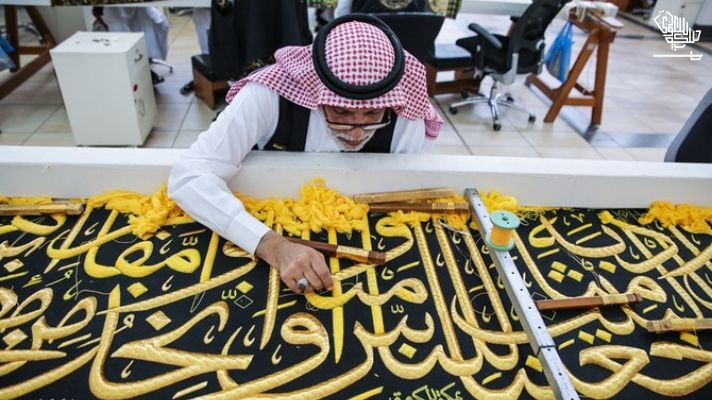
At the King Abdulaziz Complex in Umm Al-Joud, more than 200 skilled artisans work across departments specializing in silk weaving, embroidery, gold threadwork, printing, and final assembly. Despite the use of modern electronic looms and precision tools, officials consistently emphasize that the Kiswa’s production remains steeped in Islamic tradition and reverence. Many steps are still completed entirely by hand.
The 2025 Change: When Is the Kiswa Now Changed?
This is one of the most important updates and a frequent source of confusion in older guides.
Previously: The Kiswa was changed every year on the 9th of Zulhijjah, Arafat Day, the most significant day of the Hajj pilgrimage. The ceremony traditionally took place at dawn.
Since 2025: The ceremonial changing of the Kiswa was moved to 1 Muharram, the first day of the Islamic New Year. This change was made to better align with preservation and logistical needs. The 2025 Islamic New Year edition of the new Kiswa, unveiled on 1 Muharram 1447 AH (26 June 2025), features 68 Quranic verses embroidered with 24-karat gold-plated silver using traditional Islamic embroidery techniques.
The installation involves over 100 specialized technicians using electric lifts and scaffolding to ensure that no part of the Kaaba is exposed at any time during the process.
During Hajj season, the lower part of the Kiswa is raised by approximately three meters in preparation for Hajj, a standard measure undertaken each year to prevent contact with and damage by the enormous pilgrim crowds. A two-meter-wide white cotton cloth covers the exposed section during this period.
Where Is the Kiswa Factory Located?
Official address: 8308 Old Makkah-Jeddah Road, Umm Al-Joud district, Makkah, Saudi Arabia (postal code 24321)
The factory is situated in the Umm Al-Joud district of Makkah, southwest of the city center. Different sources cite the distance from Masjid al-Haram as between 10 and 17 kilometers, reflecting the difference between GPS direct-line distance and actual road distance. Travel time by car or taxi is approximately 20 to 25 minutes under normal traffic conditions, and can be longer during peak Hajj and Umrah periods when traffic around the Haram is heavy.
Getting there:
- Taxi or Uber/Careem: The most practical option. Show the driver the address or Google Maps pin for “King Abdulaziz Complex for Kiswa.” Most taxi drivers in Makkah know the factory.
- Private car: If you have access to a vehicle, use Google Maps to navigate to the Umm Al-Joud district.
- Hotel shuttle or tour operator: Many Makkah hotels and licensed Umrah tour operators include the Kiswa factory as part of a broader Makkah city tour package.
People Also Ask: Can Non-Muslims Visit the Kiswa Factory?
No. Non-Muslims cannot visit the Kiswa Factory.
The factory is located within the boundaries of Makkah, which is a city restricted exclusively to Muslims under Saudi law. Non-Muslims are not permitted to enter Makkah at any point, which means the Kiswa factory is inaccessible to non-Muslim visitors regardless of interest or purpose. This is not specific to the factory: it applies to the entire city.
For non-Muslims who wish to learn about the Kiswa, the Islamic Arts Museum Malaysia and the Islamic Museum of Riyadh both display historical Kiswa pieces. The Islamic Museum in Riyadh’s King Abdulaziz Historical Center has exhibited sections of old Kiswa cloth.
People Also Ask: Is the Kiswa Factory Free to Visit?
Yes. Entry to the Kiswa Factory is completely free.
There is no booking fee, entry charge, or payment required to visit the King Abdulaziz Complex. The visit is managed by the General Presidency of the Two Holy Mosques and is offered as a service to Muslims visiting Makkah.
The only cost is your transportation to the factory (taxi fare from the Haram area: approximately SAR 15 to 40, depending on traffic and negotiation) and the time spent on the visit.
Note: If you book through a commercial tour operator, that operator will charge a tour fee for their guide service, vehicle, and other included stops. The factory visit itself within that tour remains free; you are paying for the operator’s service.
People Also Ask: How Do I Book a Visit to the Kiswa Factory?
Advance booking is mandatory. Walk-in visitors without a prior permit are registered at the complex upon arrival and assigned a future slot based on availability, but this is not guaranteed, especially during peak Hajj and Umrah seasons.
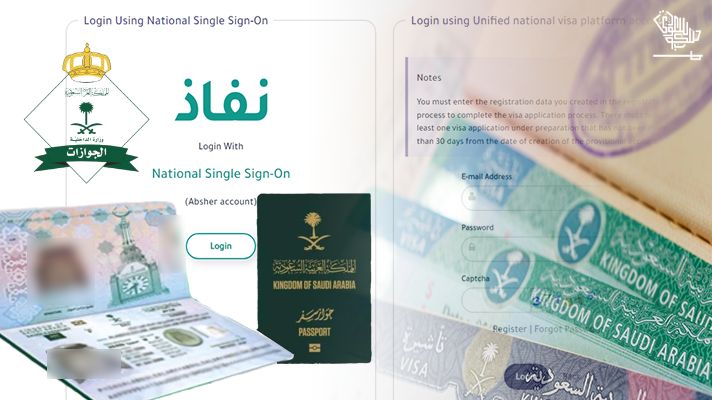
Book Through the Official Kiswa Visit Permit Service
- Open the official Kiswa visit permit service on your phone or computer
- Follow the service’s current sign-in and identification instructions
- Search for “Kiswa Factory” or “King Abdulaziz Complex” in the permit services
- Select “Individual Visit” or “Group Visit” (for groups of 20 or more)
- Choose your preferred date and available time slot
- Complete the application and receive your confirmation
- Save or print your permit confirmation for presentation at the gate
Confirm Your Permit Details
Use the official permit service linked above and follow the current on-screen instructions. The required sign-in method can change, so do not rely on an old screenshot or an unofficial booking link.
- Open your permit application in the official service
- Search for the Kiswa Factory visit permit in the government services section
- Select your date and time slot
- Confirm and save the permit
Requirements for booking:
- Identification and sign-in details requested by the official permit service
- A working mobile number if requested by the official permit service
- Valid ID: Saudi National ID (citizens), Iqama (residents), or Umrah visa documentation (pilgrims)
Method 3: Through a Licensed Umrah Tour Operator
If you are on an Umrah package, ask your tour operator to arrange a Kiswa factory visit as part of your Makkah city tour. Many operators have existing permits and can accommodate groups. This is the easiest option for pilgrims who are not comfortable booking government portals in Arabic.
Method 4: Walk-In Registration at the Factory
Visitors without prior permits can present themselves at the complex and attempt on-site registration. Staff will check slot availability, and if space exists for that day or a nearby date, you can register on the spot. This is not guaranteed and is not recommended during Hajj season or Ramadan when demand is highest.
People Also Ask: What Are the Visiting Hours of the Kiswa Factory?
Visiting hours: Monday to Thursday, 8:00am to 11:00am.
The Royal Commission’s visitor page lists Monday to Thursday, 8:00am to 11:00am. Confirm the available slot in the official permit service before traveling.
Two daily sessions run during the visiting window. Confirm the specific session times when booking, as group sizes are managed per session.
Duration: A standard guided visit lasts between 30 and 60 minutes, depending on group size, the guide’s pace, and how much time is allowed in each section.
What to Expect on the Visit: Step by Step
The guided visit to the King Abdulaziz Complex follows a structured path through the factory’s operational departments. Here is what you will encounter:
Reception and Introduction: Upon arrival, visitors are checked in and directed to the reception area. A brief introduction to the history and significance of the Kiswa is provided, often including a documentary film shown in a viewing room. The film covers the history of the Kiswa tradition, the manufacturing process, and its spiritual importance.
Silk Weaving Department: The first production area you enter is where raw silk threads are processed and woven into the base fabric. The hum of weaving machines fills the space. Both modern electronic looms and traditional manual looms operate here. Officials consistently note that manual production is retained alongside high-tech machines because of its high artistic value and the preservation of heritage techniques.
Dyeing and Quality Control: The raw silk is dyed deep black using natural dye processes. Quality control staff check the thickness, colour uniformity, and structural integrity of every panel. The standard for the Kiswa is zero tolerance: no visible defects, no variations in dye penetration.
Embroidery and Gold Threadwork Department: This is typically the most moving part of the visit for Muslim pilgrims. You observe skilled craftsmen hand-embroidering Quranic verses onto the silk panels using pure gold and silver threads. Each craftsman works with exceptional care, stitch by stitch. A single panel can take several weeks to complete. The gold and silver threads catch the light in a way that photographs do not fully capture.
The verses embroidered include text from Surah Al-Fatiha, Surah Al-Baqarah, Surah Al-Imran, and the Shahada (Islamic declaration of faith) and various supplications. All 68 Quranic verses are placed according to precise specifications developed and maintained over decades.
Historical Collection and Exhibition: The complex maintains a collection of historical Kiswa pieces and related artifacts. Visitors can see sections of old Kiswa cloth, tools used in earlier production, and documentation of the Kiswa’s history from the pre-Islamic era to the present. This is one of the rarest collections in Islamic heritage, as these pieces are kept at the factory rather than in a public museum.
Door Curtain (Burqa) Production: The Kaaba’s door is covered by a separate piece called the Burqa or door curtain. This is also produced at the factory and is among the most elaborately embroidered pieces in the complex. The Burqa contains some of the densest gold- and silver-embroidered work in the entire Kiswa commission.
People Also Ask: What Are the Kiswa Production Facts and Figures?
Here is the complete data profile of the Kiswa:
| Specification | Detail |
|---|---|
| Total area | 658 square metres |
| Number of panels | 47 silk panels |
| Total weight | 850 kg to 1 metric ton (full Kiswa) |
| Raw silk used | 670 to 700 kg of pure black silk |
| Silk origin | Imported from Italy and Switzerland; dyed locally |
| Gold thread | 120 kg of 21 to 24-karat gold-plated silver thread |
| Silver thread | 100 kg |
| Quranic verses | 68 verses hand-embroidered |
| Surah sections included | Al-Fatiha, Al-Baqarah, Al-Imran, Shahada, supplications |
| Outer embroidery colour | Black silk thread |
| Inner lining colour | Green silk thread |
| Number of artisans | 200 to 250 skilled craftsmen |
| Annual production cost | SAR 17 to 25 million (USD 4.5 to 6.6 million) |
| Factory established | 1927 (under Royal Order of King Abdulaziz) |
| Original location | Ajyad neighborhood, near the Grand Mosque |
| Current location | Umm Al-Joud district, Makkah (since 1976 renovation) |
| When changed | 1 Muharram (Islamic New Year), since 2025 |
| Previously changed on | 9 Zulhijjah (Day of Arafat) |
| Old Kiswa disposal | Cut into sections; stored, gifted to visiting dignitaries, or distributed to Islamic institutions |
People Also Ask: What Happens to the Old Kiswa After It Is Changed?
When the new Kiswa is installed on 1 Muharram, the old Kiswa is carefully removed. It is then cut into smaller sections. These pieces are stored, gifted to visiting heads of state and dignitaries, and distributed to Islamic institutions and museums worldwide. Small sections have been displayed in Islamic museums in Malaysia, Turkey, Egypt, and various other countries. Some are retained by the Saudi government as part of the national heritage collection. The old Kiswa is never sold commercially.
People Also Ask: Has the Kiswa Always Been Black?
No. The Kiswa has not always been black. Historical records document various colors used to cover the Kaaba across different Islamic periods. Red, green, white, and multicolored coverings are all documented in medieval Islamic historical sources.
The shift to black as the standard and exclusive color is associated with the Abbasid Caliphate era, when black became the dynastic color of the ruling house and was applied to the Kiswa. Since then, black has been the universal and uninterrupted choice. The outer surface is sewn using black silk thread, while the interior lining uses green silk.
People Also Ask: Was the Kiswa Always Made in Saudi Arabia?
No. Before 1927, the Kiswa was made in Egypt and sent to Makkah by caravan or ship annually. This tradition dates back centuries. Egyptian craftsmen in Cairo produced the Kiswa, and the covering of the Kaaba was funded by Egyptian rulers across different historical periods.
When King Abdulaziz Al-Saud unified the Arabian Peninsula and took control of the Hijaz region, he issued a royal order in 1926 to 1927 to establish a dedicated Kiswa manufacturing facility in Makkah, bringing production under Saudi control for the first time. The factory initially operated in the Ajyad neighborhood near the Grand Mosque, then moved to Al-Tayseer, and finally settled in its current location in the Umm Al-Joud district after a major renovation and modernization in 1976.
Dress Code and Rules for the Visit
The Kiswa factory visit is a spiritually significant experience, and visitors are expected to dress and behave accordingly.
Dress code:
- Men: Clean, modest clothing. No shorts. No sleeveless shirts. Many visitors wear ihram or white thobes.
- Women: Full abaya or equivalent modest covering. Hijab is required.
- Both: Dress as you would for visiting any Islamic institution of high significance.
Behavior rules:
- Photography may be permitted in certain areas and restricted in others. Follow the guide’s instructions on photography at each stage of the tour.
- Maintain quiet and respectful behavior throughout the visit. Loud talking or disruptive behavior is not appropriate.
- Do not touch the machinery, silk panels, or any displayed historical artifacts unless explicitly invited by the guide.
- Check the official permit service for current visitor age rules.
- Arrive at the appointed time. Late arrivals may not be accommodated.
People Also Ask: Can Foreigners Visit the Kiswa Factory?
Yes, Muslim foreigners can visit the Kiswa Factory. Any Muslim visitor to Makkah, whether on an Iqama as an expatriate resident, on an Umrah visa, or on a Hajj visa, is eligible to book a visit permit. Nationality is not a restriction; being Muslim and having lawful permission to be in Makkah is what qualifies you.
Non-Muslims cannot visit because non-Muslims cannot enter Makkah, not because of any factory-specific restriction.
Guided Tour Options
If you prefer a guided experience with transport, several operators offer Kiswa Factory tours from within Makkah:
Through your Umrah tour operator: Ask specifically for a Kiswa factory inclusion when booking your Umrah package. Most reputable operators can arrange this as an optional addition to a Makkah city tour.
Through licensed Makkah tour companies: Local licensed tour operators in Makkah offer half-day city tours that include the Kiswa factory, Al Hudaibiya, and other historical Islamic sites. These tours typically run 2 to 3 hours and include hotel pickup in some cases.
Expedia-listed tours: Trevopedia and other operators offer the Kiswah Factory tour from Makkah (3 hours, includes factory exhibition plus Al Hudaibiya historic site) listed on international booking platforms. Note that the documentary format at the factory means you observe production rather than participate; access to live production areas and hands-on stitching is not permitted for visitor groups.
Visiting as part of a Hajj or Umrah package: During Hajj season (Zulhijjah), note that factory access may be restricted or heavily booked. Umrah periods outside the peak months of Rajab and Sha’ban typically have better slot availability.
Practical Tips for Your Visit
Book your permit well in advance during Hajj and Ramadan. During peak pilgrimage seasons, slots fill quickly. Book at least two to three weeks ahead for Ramadan visits and a month ahead during the Hajj season.
Carry your original ID. Original identification (Iqama, passport, or Umrah permit documentation) is required at the gate. Photocopies are not accepted.
Arrive 10 to 15 minutes early. Security procedures at the entrance take a few minutes. Arriving at your exact appointment time risks being turned away if your slot begins before you clear the entry process.
Your visit lasts 30 to 60 minutes. Plan the rest of your Makkah day around this. Many visitors combine the Kiswa factory with Al Hudaibiya (the site of the Treaty of Hudaibiya), the Cave of Thawr, or other historic Makkah sites.
Arrange your return transport before going in. Taxis in the Umm Al-Joud area may not always be readily available. Ask your hotel to book a car for the return journey, or arrange with your driver to wait.
The factory is not open on Friday or Saturday. Plan a weekday visit (Monday to Thursday).
Photography guidance: As of 2026, photography is permitted in exhibition and historical display areas. Photography of ongoing production and embroidery work may be restricted; always follow the guide’s instructions.
People Also Search: Kiswa-Related Topics
Visitors searching for Kiswa factory information also frequently search for:
Kiswa Kaaba history: The tradition of covering the Kaaba dates to the pre-Islamic era. The Kiswa was covered with various cloths by different Arabian tribes and rulers before Islam, and the Prophet Muhammad maintained and sanctified the tradition after the conquest of Makkah.
How many times is the Kiswa changed per year: Once per year, on 1 Muharram (since 2025). Previously changed on 9 Zulhijjah.
Kiswa price / cost: SAR 17 to 25 million per year (approximately USD 4.5 to 6.6 million). The variation reflects different production cycles and specifications.
What is on the Kiswa: 68 Quranic verses hand-embroidered in gold and silver thread, including text from Surah Al-Fatiha, Surah Al-Baqarah, Surah Al-Imran, the Shahada, and various supplications.
Kiswa vs Ghilaf e Kaaba: Same object. “Kiswa” is the Arabic term; “Ghilaf e Kaaba” is the Urdu-Persian term commonly used by Pakistani, Indian, and Bangladeshi pilgrims. Both refer to the covering cloth of the Kaaba.
Where is the Kiswa stored after removal: Cut into sections, stored by the Saudi government, gifted to visiting dignitaries and heads of state, and distributed to Islamic institutions and museums worldwide.
Kaaba door curtain (Burqa): Also produced at the King Abdulaziz Complex. The Burqa is a separate, even more elaborately embroidered piece that covers the Kaaba’s door.
Silk for Kiswa: Imported primarily from Italy and Switzerland. The raw silk arrives in natural form, then is dyed deep black locally at the factory.
Frequently Asked Questions (FAQs)
The official permit service publishes the current booking requirements. Check the service before traveling because time slots and eligibility conditions can change. Select a date and time from Monday to Thursday (8am to 11am). Present your original ID at the gate. Entry is free. Check the official permit service for current age eligibility.
Yes, but only to Muslims. Makkah is restricted to Muslims, and all visitors must have lawful permission to enter the city (Saudi ID, Iqama, Umrah visa, or Hajj permit). The visit is free of charge but requires an advance permit.
No. Non-Muslims cannot enter Makkah, which makes the Kiswa factory inaccessible to non-Muslim visitors. This is a city-wide restriction, not specific to the factory.
The annual production cost is between SAR 17 million and SAR 25 million (approximately USD 4.5 to 6.6 million). It is funded entirely by the Saudi government and considered one of the Kingdom’s most important religious obligations.
Since 2025, the Kiswa is changed on 1 Muharram, the first day of the Islamic New Year. Previously, it was changed on the 9th of Zulhijjah (Arafat Day). The change was made for preservation and logistical reasons.
More than 200 skilled artisans work at the facility, across departments specializing in silk weaving, embroidery, gold threadwork, printing, and final assembly. All workers are reported to be from Makkah.
Production is continuous throughout the year. A single embroidered panel can take several weeks to complete, and with 47 panels and 200+ artisans working simultaneously, the full Kiswa takes the better part of a year to complete before the changeover on 1 Muharram.
Photography is permitted in exhibition and display areas. Photography of active production and embroidery work may be restricted. Always follow your guide’s instructions regarding photography at each stage of the tour.
Yes, but slots during Hajj season (Zulhijjah) are very limited and booked quickly. The factory also reduces visitor access around the peak Hajj days. Book permits several weeks in advance if you intend to visit during this period.
Yes. Ghilaf e Kaaba (غلاف الكعبة) is the Urdu-Persian term used predominantly by Pakistani, Indian, and Bangladeshi pilgrims, while Kiswa (كسوة) is the Arabic term. Both refer to the same cloth: the sacred covering of the Kaaba. Kiswah is an alternate English transliteration of the same word.
Conclusion: Why the Kiswa Factory Visit Is Among Makkah’s Most Profound Experiences
For Muslims, Makkah is the holiest city on earth. Within that city, the Kaaba is the focal point of every prayer. The Kiswa that covers the Kaaba is visible to every pilgrim performing tawaf and to every Muslim who has ever seen an image of the Holy Haram.
The King Abdulaziz Complex gives you something no photograph or documentary can fully replicate: the experience of standing in the place where that sacred cloth is made, watching skilled craftsmen apply gold thread to black silk with the kind of patience and precision that comes from understanding the gravity of what they are creating.
From the hum of the weaving machines to the silence of the embroidery room, the visit is a meditation on Islamic heritage, craftsmanship, and devotion. For pilgrims performing Hajj or Umrah, the Kiswa seen during tawaf transforms their visual memory into a deeply personal understanding of the human effort and faith that produce it every single year.
Book your permit early. Arrive on time. Dress respectfully. And allow the visit to be what it is: an extraordinary window into one of the most significant acts of religious devotion in the Islamic world.
Related guides on Saudi Scoop:
- Umrah Season 1448 AH Calendar for the current Umrah season dates
- Haramain Train Ticket Prices 2026 for travel between Makkah and Madinah
- Saudi Family Visit Visa 2026 for bringing family to visit Saudi Arabia
DISCLAIMER: Visiting hours, booking procedures, and access rules can change. Saudi Scoop is not affiliated with the King Abdulaziz Complex or any government body. Always verify current requirements through the official visitor page and permit service linked above before planning your visit.

Owais Qarni is a Co-Founder, Chief Editor, and Author of Saudi Scoop. He is passionate about tech, cars, and traveling. A Dreamer, Explorer & Optimist!

Comments are closed.