Quick Answer
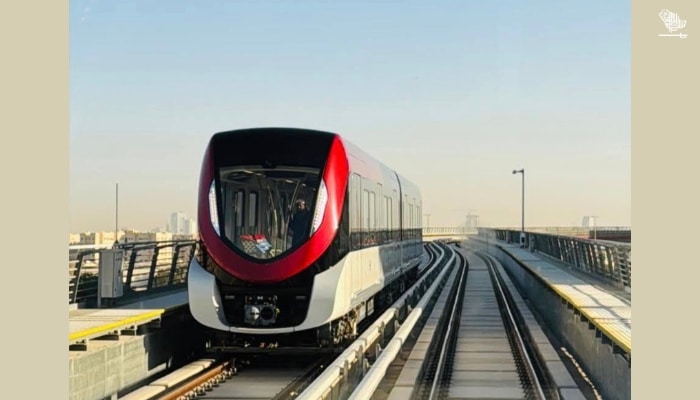
The Riyadh Metro is a six-line, 85-station rapid transit network covering 176 km across Riyadh and is currently the world’s longest fully driverless metro system. A standard 2-hour ticket costs SAR 4, while First Class costs SAR 10. Annual passes cost SAR 1,260 for Regular Class and SAR 3,150 for First Class. Student semester passes cost SAR 260 for four months as of January 2026. Tickets can be purchased through the Darb app, station kiosks, Mada cards, and credit cards. Metro operating hours are 5:30 AM to midnight from Saturday to Thursday and 10 AM to midnight on Fridays.
Quick Facts
- Launched: November 27, 2024; full network operational January 2025
- Lines: 6 color-coded metro lines
- Stations: 85 stations including Hassan bin Thabet Street Station added in 2025
- Total length: 176 km
- Type: Fully driverless GoA4 Level 4 automation system
- Classes: Standard and First Class
- Standard 2-hour pass: SAR 4
- First Class 2-hour pass: SAR 10
- Annual pass (Regular): SAR 1,260 effective January 2026
- Annual pass (First Class): SAR 3,150 effective January 2026
- Student semester ticket: SAR 260 for 4 months introduced January 2026
- Children under 6: Free travel
- Ticket purchase: Darb app, station kiosks, Mada cards, and credit cards
- Operating hours Saturday to Thursday: 5:30 AM to midnight
- Operating hours Friday: 10 AM to midnight
- Park and ride: Free for first 12 hours at selected stations, then SAR 10 per hour
- Q3 2025 ridership: 25.2 million passengers, up 335% year-on-year
- Line 7 planned: 65 km loop connecting Qiddiya with 145 firms bidding by November 2025
Why the Riyadh Metro Matters in 2026
Riyadh was, for decades, one of the most car-dependent capital cities on earth: a sprawling metropolis of over 7 million people with almost no public transit and traffic congestion that consumed hours of daily life for its residents. The Riyadh Metro changes this fundamentally.
Inaugurated by King Salman on November 27, 2024, and brought to full network operation in January 2025, the metro is already one of the defining infrastructure achievements of Vision 2030. In Q3 2025 alone, the system carried 25.2 million passengers, a 335% year-on-year increase that underscores how rapidly Riyadh’s residents have adopted it.
The metro is 100% driverless, operating at GoA4 level automation, the highest possible level, meaning trains operate entirely without drivers or on-board staff under any conditions. All 85 stations are air-conditioned with free Wi-Fi, platform screen doors, and full accessibility. 36 stations carry LEED certification (gold or silver), with solar panels, rainwater recycling, and regenerative braking that feeds power back to the grid.
For expats, tourists, students, and daily commuters, the metro is now the fastest, cheapest, and most predictable way to move across Riyadh, saving the typical taxi fare of SAR 25 to 60 with a SAR 4 flat fare.
The Six Lines: Routes, Key Stations, and What They Connect
Line 1: Blue Line
Route: King Abdullah Financial District (KAFD) to Al Batha (Old Town)
The Blue Line is the backbone of the network, running 38.8 km through the heart of Riyadh. It passes through the most significant landmarks and connects the modern financial district to the historic city center in a single ride. Key stops include King Abdullah Financial District (transfer hub), King Fahd Road (commercial district), Al Olaya (shopping and business), and Al Batha (old Riyadh, traditional souks).
Best for: Business travelers, daily commuters between KAFD and the city center, shoppers heading to Kingdom Center and Olaya malls.
Interchange stations: Connects to Lines 2, 4, and 5 at major interchange hubs.
Line 2: Red Line
Route: North Riyadh to South Riyadh
The Red Line runs roughly north-south across the city, covering the longest single continuous route of any line. Key stations include Al Nakheel (northern residential, open-air markets) and pass through multiple residential and commercial areas toward the south. The Qasr Al Hokm station serves the historic Al Diriyah-adjacent Qasr Al Hokm palace district and the Grand Mosque Al Rajhi (world’s largest mosque in terms of capacity), whose approaches the Red Line reaches.
Best for: Residents in the north and south Riyadh residential corridors.
Line 3: Orange Line
Route: East-West corridor connecting the King Khalid International Airport area to western Riyadh
The Orange Line was the last to open (January 5, 2025). It includes Al Malaz, linking King Fahad Medical City for hospital access, and extends toward the western residential zones.
Best for: Healthcare access (King Fahad Medical City), eastern and western residential commuters.
Notable new station: Hassan bin Thabet Street Station, added in 2025 as an expansion of the Orange Line.
Line 4: Yellow Line (Airport Line)
Route: King Khalid International Airport (KKIA) to central Riyadh
The Yellow Line is the most valuable line for visitors arriving at Riyadh’s international airport. It includes three dedicated airport stations: Terminal 1 and 2 (Station 20), Terminal 3 and 4 (Station 19), and Terminal 5 (Station 18), giving direct rail access to all terminal groups.
February 2026 terminal update: King Khalid International Airport completed the largest terminal reallocation in its history. Terminals 1 and 2 now handle international flights by Saudi carriers (Flyadeal and Flynas at T1, Saudia and Riyadh Air at T2). Terminals 3 and 4 serve domestic routes. Terminal 5 handles international flights by foreign airlines. Check your terminal before heading to the correct Yellow Line station.
The metro replaces a SAR 40 to 80 taxi ride from the airport with a SAR 4 metro fare in a fixed, traffic-free journey time. The airport is 35 km north of central Riyadh.
Also on Line 4: Kingdom Center and Olaya (Al Olaya station, Line 4 Yellow Line), connecting to the sky bridge over King Fahad Road, malls, and the ice rink below.
Best for: Airport arrivals and departures; KAFD workers; Kingdom Center shoppers.
Line 5: Green Line
Route: Western and southwestern Riyadh, including the Princess Nourah University area
The Green Line serves western and southern Riyadh, connecting Princess Nourah University (the world’s largest women’s university) and providing access to the Diriyah area. The SAB station on the Green Line is the closest metro point to the Diriyah UNESCO World Heritage Site, from which a short ride-hailing connection reaches At-Turaif and Bujairi, Terrace.
Best for: Students at Princess Nourah University; visitors heading toward Diriyah; western district residents.
Park and ride: Princess Nourah University 2 station is one of the nine designated park-and-ride stations.
Line 6: Purple Line
Route: Southern and southeastern Riyadh
The Purple Line extends the network into the southern and southeastern residential districts, providing connectivity for residents in these areas to the main city-center network. It opened alongside Lines 1, 4, and 6 on December 1, 2024.
Best for: South Riyadh residents commuting to the city center.
Complete Fare Guide 2026
Riyadh Metro operates a flat-rate network in which a single ticket covers unlimited travel across all six lines for the duration of the ticket. This makes it significantly more straightforward than many global metro systems.
Standard Ticket Options
| Ticket Type | Standard Class (SAR) | First Class (SAR) |
|---|---|---|
| 2-Hour Pass | 4 | 10 |
| 3-Day Pass | 20 | 50 |
| 7-Day Pass | 40 | 100 |
| 30-Day Pass | 140 | 350 |
Annual and Long-Term Passes (New in January 2026)
| Pass Type | Price (SAR) | Validity |
|---|---|---|
| Annual Regular | 1,260 | 1 year |
| Annual First Class | 3,150 | 1 year |
| Student Semester (Regular) | 260 | 4 months |
Annual and semester passes are available via the Darb card in both plastic and digital formats. The student semester ticket, introduced January 2026, is designed for school and university students and aligns with academic semesters.
Special Fares
Children under 6: Free travel at all times on all lines.
Students: Semester ticket at SAR 260 for 4 months (Regular category). Requires valid student ID at time of registration.
The annual pass value calculation: At SAR 1,260 per year, a regular annual pass costs SAR 3.45 per day for unlimited rides. For anyone using the metro 5 days a week or more, the annual pass represents significant savings over individual 2-hour passes at SAR 4 each.
How to Buy Tickets: The Darb Card and App
The Darb card and Darb app are the official ticketing platforms for the Riyadh Metro and Riyadh Bus service.
Darb App (Recommended)
- Download the Darb app from the App Store (iOS) or Google Play (Android)
- Create an account with your mobile number and ID
- Top up your Darb wallet using Mada, credit card, Apple Pay, or STC Pay
- Select your ticket type (2-hour, 3-day, 7-day, 30-day, or annual)
- Activate the ticket when you are at the station
- Present the QR code at the gate or tap the NFC chip of your digital Darb card
Route planning: The Darb app includes a built-in route planner that shows which lines and interchanges to use to reach any destination. Enter your start and end points, and it gives you step-by-step metro directions. It also integrates Riyadh Bus routes, allowing you to plan combined metro-bus journeys in one interface.
Darb Physical Card
A physical Darb card (similar to an Oyster card in London or a metro card in New York) can be loaded at station kiosks. Tap the card on the gate reader to enter and exit. The card is reusable and reloadable.
Station Kiosks
Self-service ticket machines are available at all 85 stations in Arabic and English. Mada (Saudi debit card), Visa, Mastercard, and cash are accepted at kiosks.
Standard Class vs First Class: What Is Different?
| Feature | Standard Class | First Class |
|---|---|---|
| Dedicated carriage | No (general boarding) | Yes (reserved First Class carriage) |
| Seat availability | General seating | Wider, more comfortable seats |
| Price premium | Base fare (SAR 4/2hr) | 2.5x premium (SAR 10/2hr) |
| Noise level | Standard | Quieter, fewer passengers |
| Best for | Daily commuters, short trips, budget travelers | Longer journeys, premium comfort, privacy |
In addition to Standard and First Class, all trains have Family and Ladies-only carriages specifically for women and families traveling together. These are standard practice across Saudi public transport and are clearly marked at the platform.
Key Stations and What They Connect to
| Station | Line | What It Connects |
|---|---|---|
| King Abdullah Financial District (KAFD) | Blue (1) | Saudi Arabia’s financial hub, Riyadh Season events |
| STC | Blue (1), Yellow (4) | Major interchange, central Riyadh hub |
| Qasr Al Hokm | Blue (1), Red (2) | Historic district, major interchange |
| Western Station | Blue (1), Green (5) | Major interchange, western hub |
| Al Olaya | Blue (1), Yellow (4) | Northern residential markets |
| Terminal 1 and 2 (Airport) | Yellow (4) | KKIA: Flyadeal/Flynas and Saudia/Riyadh Air |
| Terminal 3 and 4 (Airport) | Yellow (4) | KKIA: Domestic flights |
| Terminal 5 (Airport) | Yellow (4) | KKIA: Foreign airline international flights |
| Princess Nourah University 2 | Green (5) | PNU campus, park and ride |
| SAB | Green (5) | Closest metro to Diriyah (UNESCO site) |
| Al Malaz | Orange (3) | King Fahad Medical City |
| Al Batha | Blue (1) | Old Riyadh, traditional souks |
| Al Nakheel | Red (2) | Northern residential, markets |
Park and Ride: Free Parking at Nine Stations
Riyadh Metro provides free park-and-ride facilities at nine stations, making it practical to drive part of the way and take the metro the rest, particularly useful for residents in areas without direct metro access.
Stations with park and ride:
- Ad Dar Al Baida
- Al Hamra
- An Naseem
- Ar Rabi
- Jeddah Road
- Princess Nourah University 2
- SAB
- Sultanah
- Hassan bin Thabet Street (newly added 2025)
Parking fees: Free for the first 12 hours. After 12 hours: SAR 10 per hour. For daily commuters, arriving in the morning and returning in the evening falls comfortably within the free 12-hour window.
Metro Fines: What You Must Know
The Riyadh Metro has a well-enforced code of conduct. Violations result in fines of up to SAR 500.
Fines apply for:
- Traveling without a valid ticket
- Eating or drinking inside trains or on platforms
- Bringing animals on board (except guide dogs)
- Smoking anywhere in the metro system
- Using Standard Class with a First Class ticket for the wrong carriage (or vice versa)
- Damaging station or train property
- Obstructing doors or gates
Enforcement: Plain-clothes and uniformed inspectors operate throughout the network. Gate scanning is enforced; an invalid or expired ticket will not open the turnstile.
Riding the Metro: Practical Tips for 2026
Download the Darb app before you travel. Route planning, ticket purchase, and real-time updates are all in one place. The app shows which line interchange to use and the exact journey time.
The SAR 4 airport fare is one of the best deals in public transport globally. A taxi from KKIA to central Riyadh costs SAR 40 to 80 and can take 45 to 90 minutes in traffic. The metro costs SAR 4 and runs on a fixed schedule. If your arrival or departure terminal is served by the Yellow Line, the metro is almost always the better choice.
Check your KKIA terminal after the February 2026 reallocation. Terminal assignments changed significantly: T1 (Flyadeal, Flynas), T2 (Saudia, Riyadh Air), T3 and T4 (domestic), T5 (foreign international carriers). Know which terminal you need before choosing your Yellow Line station.
Free Wi-Fi at every station. All 85 stations offer free Wi-Fi. Download offline maps as an additional backup before your journey, but the in-station Wi-Fi is reliable.
Platform screen doors are on every station. Unlike many developing metro systems, Riyadh Metro has full-height platform screen doors at every station, so there is no gap between the platform and the train.
Ramadan adjustments. During Ramadan, metro operating hours shift later to align with fasting schedules. Always check official Riyadh Metro social media (@_RiyadhMetro on X) or the Darb app for the current schedule during Ramadan.
Family and Ladies carriages are at specific positions on each train. Look for the markings on the platform floor and on the train exterior to board the correct carriage.
For the Diriyah trip: Take Green Line to SAB station, then a 5 to 10 minute ride-hailing connection to At-Turaif and Bujairi Terrace. The metro plus short ride-hailing is faster and cheaper than driving and parking.
Riyadh Metro vs Taxi vs Ride-Hailing: Which Should You Use?
| Journey Type | Metro | Taxi/Ride-hailing | Why Choose Metro |
|---|---|---|---|
| Airport to city center | SAR 4, 35 to 45 min | SAR 40 to 80, 30 to 90 min | 10x cheaper, predictable time |
| Use Uber/Careem for the last mile | SAR 4, 15 to 20 min | SAR 20 to 35, 10 to 30 min | Cheaper, avoids traffic |
| City center day exploring | SAR 4 for 2 hours unlimited | SAR 20 to 40 per trip | Multiple stops on one ticket |
| Late night after midnight | Not available (runs until midnight) | Available 24 hours | Use ride-hailing after midnight |
| Diriyah visit | SAR 4 to SAB + short cab | SAR 40 to 60 return | Much cheaper, reliable |
| Outlying residential areas not on metro | Not available | Only practical option | Use Uber/Careem for last mile |
The metro consistently cuts taxi costs by 70% or more for journeys well served by the network. For the last-mile connection from stations to destinations not directly adjacent to a stop, combining metro with a short Uber or Careem ride is both cheaper and often faster than a full taxi journey door-to-door.
Line 7: What Is Coming Next
The Riyadh Metro expansion is already in planning. Line 7 is a proposed 65-km loop connecting the city core to Qiddiya entertainment city with 19 stops, 14 of which are underground. It would link entertainment hubs, Diriyah’s gates, and the Diplomatic Quarter.
By November 2025, 145 firms had submitted bids for the project. New stations are expected to open in 2027. When complete, Line 7 will extend the metro’s reach to Qiddiya, which is being developed as Saudi Arabia’s equivalent of a mega-scale entertainment city, with a Six Flags park, an esports arena, and a motorsport circuit.
Frequently Asked Questions
Q: How much does the Riyadh Metro cost per ride? A standard 2-hour pass costs SAR 4, which covers unlimited travel across all six lines within the 2-hour window. First Class costs SAR 10. For longer stays: 3-day pass SAR 20 (standard), 7-day pass SAR 40, 30-day pass SAR 140. Annual passes launched January 2026 at SAR 1,260 (regular) and SAR 3,150 (First Class).
Q: How do I buy a Riyadh Metro ticket? Download the Darb app and buy tickets digitally, or purchase a physical Darb card at any station kiosk. Mada, credit cards, Apple Pay, and STC Pay are all accepted. Children under 6 travel free.
Q: Does the Riyadh Metro go to the airport? Yes. The Yellow Line (Line 4) has three dedicated stations serving all terminals at King Khalid International Airport. The fare from the airport to central Riyadh is SAR 4 per the standard 2-hour pass. After the February 2026 terminal reallocation, T1 and T2 are at Station 20, T3 and T4 at Station 19, and T5 at Station 18.
Q: What are the Riyadh Metro operating hours in 2026? Saturday to Thursday: 5:30am to midnight. Friday: 10am to midnight. During Ramadan, hours shift later. Check the Darb app or @_RiyadhMetro on X for current schedules.
Q: How many lines and stations does the Riyadh Metro have? Six lines covering 176 km with 85 stations as of May 2026. The Hassan bin Thabet Street Station on the Orange Line was added in 2025. Line 7 (65 km, 19 stations) is in planning with expected opening in 2027.
Q: What is the Darb card? The Darb card is the official metro and bus payment card for the Riyadh Metro and Riyadh Bus network, functioning like an Oyster card or metro card. It is available in physical (card) and digital (app) formats. Top up at station kiosks or via the Darb app.
Q: Is there parking at Riyadh Metro stations? Yes. Nine stations offer park-and-ride facilities including Ad Dar Al Baida, Al Hamra, An Naseem, Ar Rabi, Jeddah Road, Princess Nourah University 2, SAB, Sultanah, and Hassan bin Thabet Street. Parking is free for the first 12 hours, then SAR 10 per hour.
Q: Is there a student discount on the Riyadh Metro? Yes. The Semester Ticket, introduced January 2026, costs SAR 260 for the Regular category and is valid for 4 months from activation, aligned with academic semesters. Available via the Darb card with a valid student ID.
Q: What are the fines on the Riyadh Metro? Violations, including traveling without a valid ticket, eating or drinking on board, and smoking, can result in fines up to SAR 500. Enforcement is active throughout the network.
Q: Can I get to Diriyah on the Riyadh Metro? Yes, partially. Take the Green Line to the SAB station, then a short 5 to 10-minute ride-hailing connection to reach At-Turaif and Bujairi Terrace. There is no station directly at the Diriyah site itself, but the SAB station is the closest access point on the network.
Summary: Riyadh Metro at a Glance
The Riyadh Metro in 2026 is a mature, well-ridden, expanding network that has delivered on its promise of transforming mobility in the Saudi capital. With 25.2 million riders in Q3 2025 alone, a 335% year-on-year growth in ridership, new annual and student passes introduced in January 2026, and Line 7 in planning for 2027, it is both the present and the future of getting around Riyadh.
For residents and visitors, the practical case is simple: SAR 4 for a 2-hour unlimited pass, a direct airport connection for the same SAR 4, free Wi-Fi at every station, 100% air-conditioned, driverless, and punctual. The Riyadh Metro is almost always the right choice for any journey it serves.
Related guides on Saudi Scoop:
- Best Breakfast Places in Riyadh 2026 for where to go after riding the metro
- Life in Saudi Arabia for Expats 2026 for the complete Riyadh living guide
- Haramain Train Ticket Prices 2026 for intercity rail between Riyadh and Jeddah
DISCLAIMER: This article is for informational purposes only. Metro fares, operating hours, and station details are subject to change. Saudi Scoop is not affiliated with the Riyadh Public Transport Authority or the Royal Commission for Riyadh City. Always verify current information via the Darb app or rcrc.gov.sa.

Owais Qarni is the co-founder and author at Saudi Scoop. A Dreamer, Explorer, and Optimist! His work focuses on creating informative and engaging content, offering fresh perspectives on topics relevant to both local and global audiences.